Malaysia Haze: What Delivery and Site Operators Should Check Before Dispatch
Unhealthy air quality puts outdoor work and delivery bookings in focus. Check local conditions, receiving slots and rescheduling responsibilities.
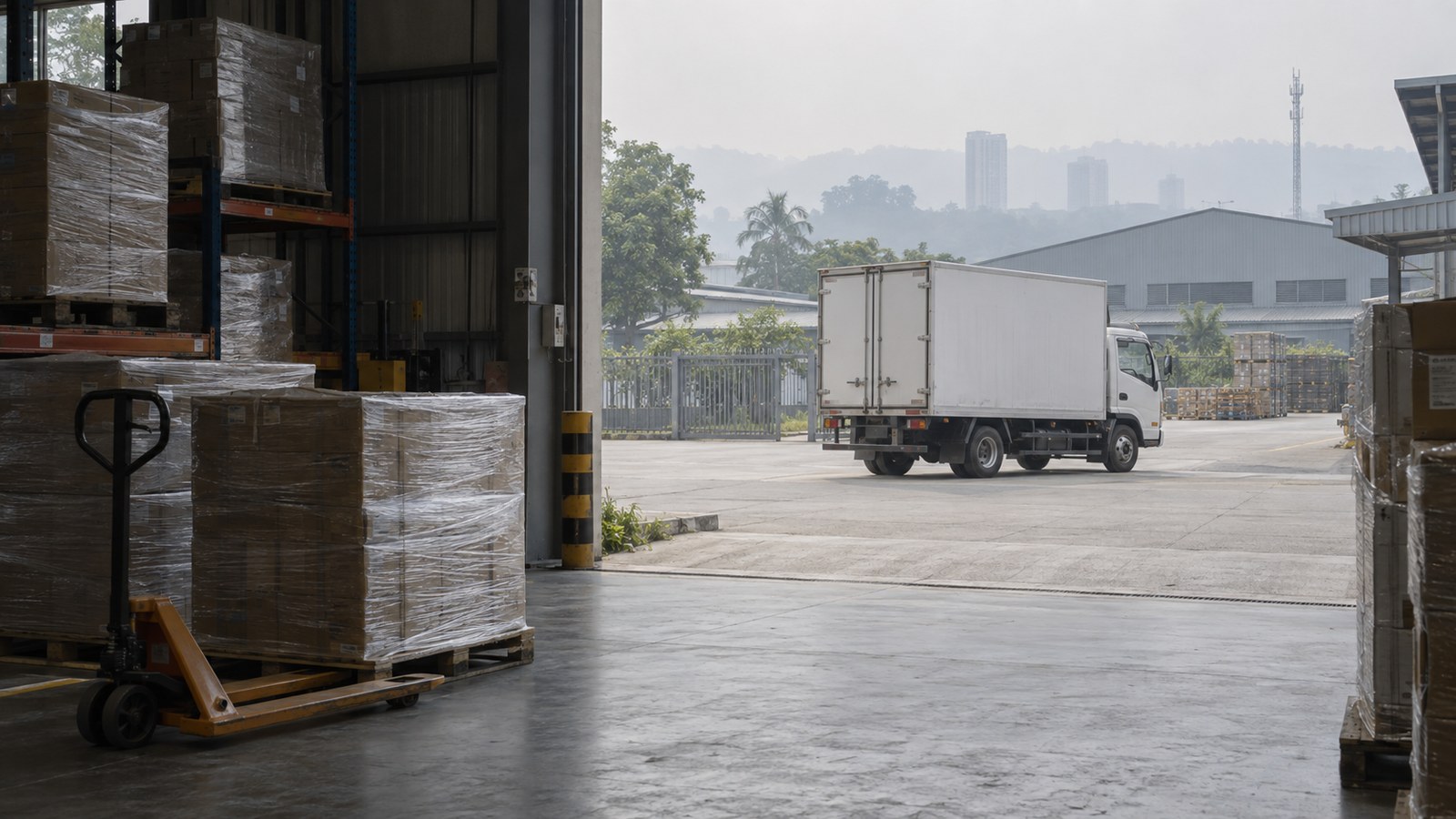
If your delivery depends on an outdoor loading crew or an open construction site, check that the receiving team can still accept it before dispatch. During haze, a confirmed order may need a revised working slot. Your schedule should follow the site’s safety decision and current local information.
BusinessToday reported on 17 September 2026 that 28 areas recorded unhealthy air quality at 9.45am. Its report cited Air Pollutant Index (API) readings of 157 in Johan Setia, 154 in Shah Alam, 144 in Banting and 135 in Petaling Jaya. These are a dated snapshot, rather than a forecast for the rest of the day.
For small operators, the practical issue is coordinating people, vehicles and customer promises when outdoor work arrangements may change. The planning checks below are our operational interpretation; the report does not establish that particular deliveries or projects have been delayed.
Check the timestamp before confirming a working slot
Use the Department of Environment’s APIMS service for updated local air-quality information, alongside current official advisories and instructions from the person responsible for the workplace. A morning news report cannot confirm conditions at a different location later in the afternoon.
Record when the receiving site last confirmed its arrangements. Give dispatch staff one named contact who can authorise a departure, hold or revised arrival time. This makes it easier to avoid conflicting instructions between a driver, customer and site supervisor.
Safety decisions come before recovering the schedule
The Ministry of Health’s workplace haze advisory advises employers to reduce outdoor activities and identifies minimising strenuous outdoor tasks among measures for unhealthy API conditions. It also addresses suitable respiratory protection, fit testing and reassignment of susceptible workers.
DOSH’s guidance on protecting employees during haze includes advance planning for outdoor work and communication with employees. Apply the relevant guidance through your workplace safety arrangements; a delivery deadline should not override those decisions.
Moving a task under a roof does not by itself establish that the air is suitable. Avoid treating a covered loading bay as an automatic solution or assuming a delayed job can simply be completed faster outdoors later.
Four commitments to review when arrangements change
Receiving capacity. Ask whether the customer can unload, inspect and acknowledge the goods at the agreed time. A vehicle can reach the premises while the team needed to receive it is unavailable.
Dispatch authority. Decide who will release the vehicle once the new slot is confirmed. Keep that instruction visible to the scheduler and driver so an earlier booking does not trigger an unnecessary trip.
Standby and rebooking costs. Review your own transport and equipment terms. Clarify how waiting time, another trip or a changed hire date would be handled, and record any agreed adjustment. The news report provides no basis to assume those charges are waived.
Customer updates. Separate what is confirmed from what remains conditional. Give the next update time if a reliable completion time is unavailable. That helps the customer decide whether to change their own labour or equipment booking.
A changed slot does not always require more capacity
Consider a hypothetical materials supplier whose afternoon delivery is postponed by the receiving site. Sending a second lorry would not resolve the unavailable unloading slot. The useful first step is to confirm a new receiving window, then adjust dispatch and advise the customer.
For equipment operators, apply the same check to expected working hours. Review which bookings are firm, which remain conditional and when each will be reconfirmed. Extra machinery only helps if the work area and supporting team can use it safely and productively.
What to watch next
Monitor updated local readings, official advisories and the receiving site’s instructions. If conditions or work arrangements change, revisit the affected bookings individually. This report supports preparing for disruption; it does not establish how long any disruption will last or how much business revenue will be affected.
If a revised work plan changes an equipment purchase you were already considering, Ing Heng can discuss your equipment financing requirements. Start with the actual job schedule and expected utilisation so the discussion reflects the work you intend to perform.
News source: BusinessToday, 28 Areas Record Unhealthy Air Quality Across Malaysia, published 17 September 2026. Workplace context: Ministry of Health advisory and DOSH guidance linked above. The image is an AI-generated illustration of a generic warehouse yard.
Questions Business Owners Ask
Do the reported API readings describe conditions for the whole day?
No. BusinessToday's report refers to readings at 9.45am on 17 September 2026. Check updated official local information and the receiving site's instructions before dispatch.
Does the report mean every Malaysian worksite is closed?
No nationwide closure instruction is established by this report. Work decisions should follow current official guidance and the responsible site's safety assessment and instructions.
What should a delivery business confirm when a receiving slot changes?
Confirm the revised slot, who authorises dispatch, any waiting or rebooking charges, and when the customer will receive another update. Record the agreement before committing the vehicle.