Malaysia's E-Commerce Income Hit RM1.29 Trillion. What SMEs Should Check Before Online Demand Gets Costly
BusinessToday reported on July 1, 2026 that Malaysia's e-commerce income reached RM1.29 trillion in 2024, with stronger business adoption of digital tools. For Malaysian SMEs, the practical question is whether stock, fulfilment, delivery, and cash-flow capacity are keeping up with online demand.
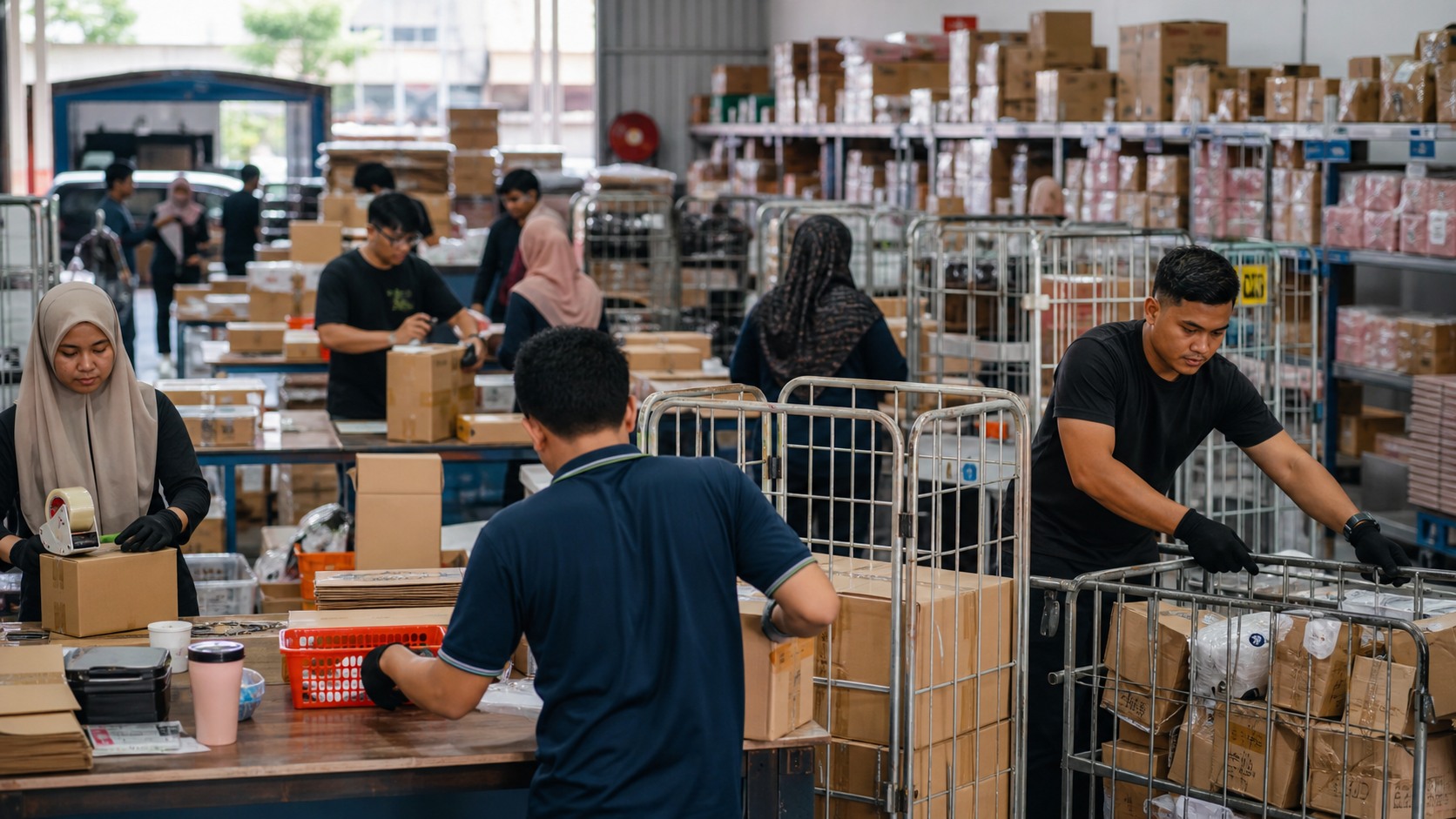
If your business is selling faster online, supplying online-first customers, or getting pulled into shorter delivery cycles, the headline is worth reading carefully. DOSM released these 2024 figures on June 30, 2026; BusinessToday covered them on July 1. Malaysia’s e-commerce income reached RM1.29 trillion in 2024, up from RM1.18 trillion in 2023. The figures describe 2024 activity, not a measured rise in 2026 orders.
That sounds like a digital-economy milestone, but the day-to-day business question is more practical: can your stock, fulfilment, vehicles, and cash flow keep pace if online demand keeps raising expectations on speed and availability?
What Happened
According to the Department of Statistics Malaysia, 97.2% of business establishments used computers in 2024, while 95.3% had internet access and 74.4% had a web presence. DOSM said total e-commerce income rose 8.8% year on year in 2024.
The domestic market accounted for RM1.15 trillion, while international e-commerce income reached RM138 billion. The services sector recorded RM639.8 billion.
BusinessToday also reported that business-to-business transactions reached RM879.6 billion, still the biggest share of e-commerce activity. That matters because Malaysia’s online growth is not only about consumer checkouts. It also reflects procurement, supplier ordering, replenishment, and inter-company trade moving through digital channels.
Why This Matters For Malaysian SMEs
For SMEs, stronger e-commerce does not just mean more sales opportunities. It can also mean tighter operating discipline.
When more orders move online, customers usually expect clearer stock visibility, faster response times, shorter delivery windows, and fewer fulfilment mistakes. Even businesses that do not see themselves as “e-commerce companies” can feel the pressure if their customers, dealers, distributors, or suppliers are becoming more digital.
The real operational questions are often these:
- are you holding enough stock without tying up too much cash
- can your team pack, load, or dispatch quickly enough during peak periods
- are delivery vehicles, forklifts, shelving, or warehouse tools starting to slow response time
- can customer payments keep up with the extra inventory and operating spend needed to support faster turnover
That is why this story has wider business relevance. If your own digital orders are rising, fulfilment systems, delivery assets, and cash timing deserve a closer look before you commit to expansion.
What Owners Should Watch Next
The headline number alone should not push a business into expansion. What matters is whether online-linked demand is becoming repeatable and profitable.
For many SMEs, the next useful checks are:
- whether order volume is rising consistently or only during campaign spikes
- whether stock turnover is improving without creating overbuying risk
- whether delivery costs are rising faster than margins
- whether packaging, storage, or loading capacity is becoming a bottleneck
Businesses serving retail, distribution, spare parts, light manufacturing, food supply, or delivery-heavy sectors may also need to review whether a commercial vehicle financing plan or equipment financing solution fits their next stage better than draining working cash all at once.
The point is not to finance growth for its own sake. It is to avoid a situation where online demand looks healthy, but the business starts losing flexibility because inventory, transport, or warehouse needs are funded too late.
Where Ing Heng Fits
Ing Heng fits at the planning edge of this story. If stronger online trade is pushing you to add delivery capacity, warehouse equipment, or business-use assets, the useful move is to review your options before fulfilment pressure becomes urgent.
That can help preserve room for payroll, supplier payments, and ordinary monthly operations while you decide whether current demand is strong enough to support a bigger commitment.
News Source
- Department of Statistics Malaysia. “Statistics on Usage of ICT and E-Commerce by Establishments 2025 (Reference Year 2024).” Released June 30, 2026. Official release.
- BusinessToday. “Malaysia’s E-Commerce Income Hits RM1.29 Trillion In 2024, As Adoption Expands.” Published July 1, 2026. Source URL: https://www.businesstoday.com.my/2026/07/01/malaysias-e-commerce-income-hits-rm1-29-trillion-in-2024-as-adoption-expands/
Questions Business Owners Ask
What did Malaysia's new e-commerce data show?
BusinessToday reported that Malaysia's e-commerce income reached RM1.29 trillion in 2024, up from RM1.18 trillion in 2023, while digital adoption among businesses also increased.
How much e-commerce income did Malaysia's services sector record?
DOSM reported that the services sector recorded RM639.8 billion in e-commerce income in 2024.
Why should SMEs care about higher e-commerce income if they do not run a big online store?
Because stronger digital commerce can affect stock timing, supplier orders, warehousing, delivery activity, and customer expectations across the wider supply chain, not just direct online sellers.