Malaysia's AI Power Demand: Check Electrical Capacity Before Adding Equipment
AI and data-centre growth is raising Malaysia's electricity demand. What power-intensive SMEs should confirm before adding machinery or load.
If you plan to add power-intensive machinery, do not treat the purchase price as the only readiness test. Confirm whether your premises can support the load, what electrical work is required and when the equipment can actually begin productive work.
BusinessToday reported on 18 September 2026 that BMI expects Malaysia’s electricity consumption to grow by an average 3.3% a year over the next decade. The research house linked recent forecast revisions to data-centre investment and expanding artificial-intelligence workloads.
For Malaysian manufacturers, workshops and other electricity-dependent SMEs, the useful implication is not that a shortage will occur at every site. It is that electrical capacity and connection timing deserve an earlier place in equipment planning. The checks below are Ing Heng’s operational interpretation; the source does not report a restriction on a specific business or location.
Data-centre growth is making power capacity a bigger planning issue
BusinessToday reported that BMI estimates Malaysian data-centre capacity will increase by about 50% year on year to 1.6GW in 2026. It also cited the Energy Transition and Water Transformation Ministry’s July figures: TNB was supplying 36 operating data centres with planned capacity of about 4.5GW, while 23 projects under construction had maximum demand of 3.8GW.
BMI expects electricity-supply constraints to peak in 2026 before additional generating capacity offers some relief in 2027. The report also cautions that continued hyperscaler expansion could keep conditions tight for longer.
These are sector-level forecasts and capacity figures. They do not tell you the spare capacity at an individual factory, shop or workshop. That must be checked for the actual premises and equipment.
Check the usable load before signing the equipment order
Start with the machinery supplier’s electrical specification, then ask the appropriately qualified parties to assess the premises. Record the answer to five practical questions:
- Required supply: What voltage, phase, starting load and continuous load does the equipment require?
- Usable site capacity: Can the existing distribution board, cabling and protection support the equipment together with normal operations?
- Upgrade scope: Are switchgear, cabling, ventilation, transformer or connection changes required, and who is responsible for each item?
- Approval and installation timing: Which technical approvals, appointments and shutdown windows must happen before commissioning?
- Production use: Is there enough confirmed workload to use the equipment once the electrical work is complete?
These questions do not replace an electrical assessment. They prevent a commercial decision from getting too far ahead of the technical work.
Separate a national forecast from your site decision
A forecast of stronger national demand is useful context, but it is not a reason to rush an equipment purchase. Your decision still depends on the capacity available at your location, the cost and timing of any upgrade, and the revenue supported by the new asset.
Build the timeline from the intended operating date backwards. Include equipment delivery, electrical works, inspection or approval steps where applicable, testing, operator preparation and a delayed-commissioning case. If the machinery arrives before the premises are ready, repayment or rental costs may begin while the asset is still idle.
For contractors serving data-centre or grid projects, use the same discipline. A stronger investment pipeline does not establish your own purchase order, site access or work release. Tie equipment commitments to written scope and executable timing, as discussed in our Johor electrical-supplier planning explainer.
What businesses should watch next
BusinessToday’s report says Malaysia is tightening conditions around data-centre connections, with operators increasingly expected to show adequate power and water arrangements. It also says the government has stated that infrastructure upgrades required specifically for data centres would be borne by developers, while domestic users and existing industries remain a priority.
For your own business, watch the evidence closest to the premises: the technical assessment, written upgrade scope, connection or approval requirements, supplier lead time and commissioning date. Recheck the purchase plan if one of those changes.
If the equipment requirement and electrical plan are already confirmed, Ing Heng can discuss equipment financing against the real installation and utilisation schedule. The aim is to match the financing enquiry to an asset that the business can install and use, rather than to the size of the national investment headline.
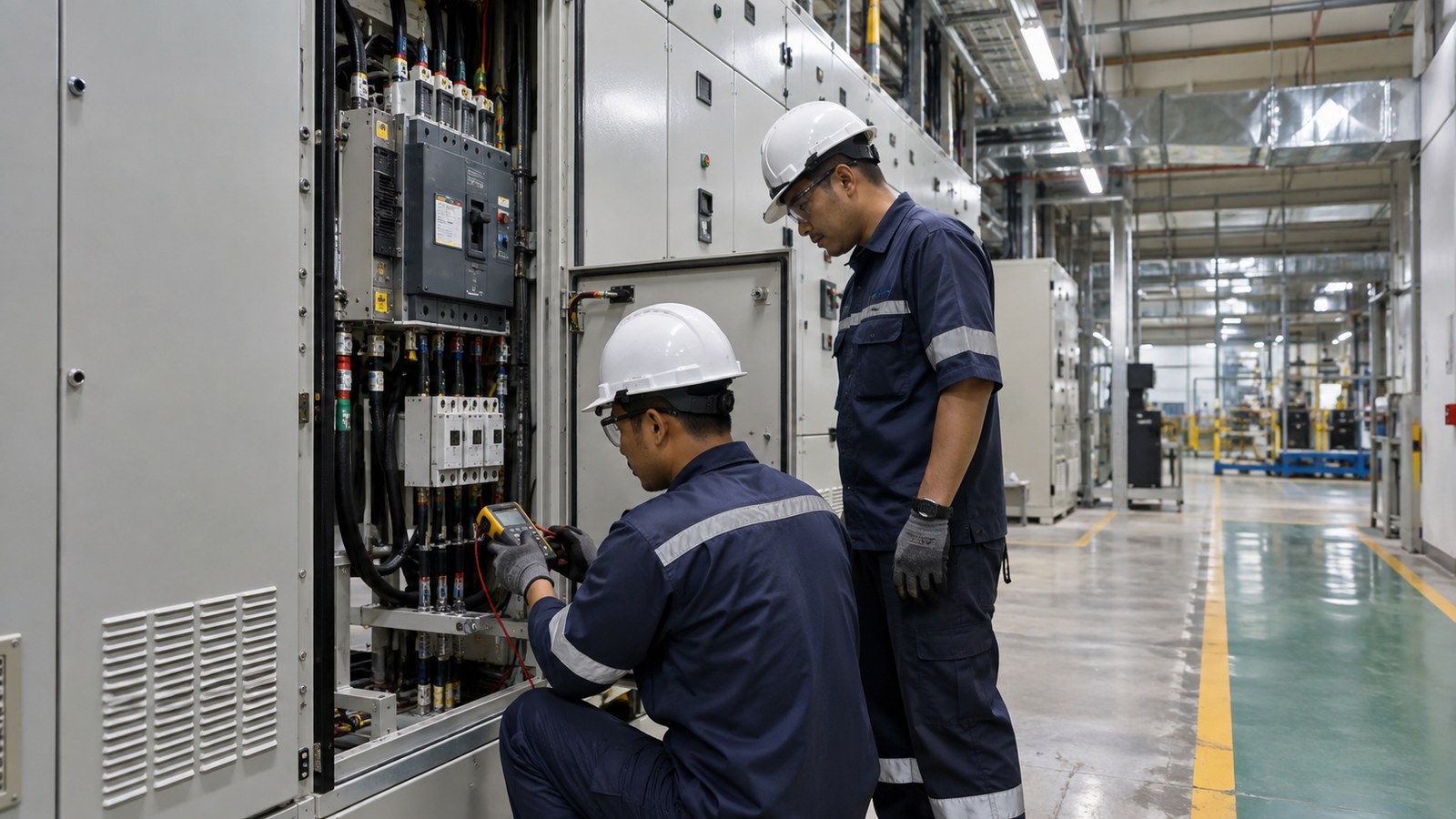
News source: BusinessToday, “BMI Sees Malaysia Power Demand Rising 3.3% Annually, As AI, Data Centre Strain Grid”, published 18 September 2026. Forecasts and reported capacity figures are attributed to the source. Site-planning checks are Ing Heng’s interpretation. The image is an AI-generated illustration of generic industrial electrical work.
A financing option related to this article
Compare the relevant financing route and documents before committing to a purchase.
Machinery financingQuestions Business Owners Ask
How quickly does BMI expect Malaysia's electricity consumption to grow?
BusinessToday reported BMI's forecast of average annual electricity-consumption growth of 3.3% over the next decade. It is a forecast, not a guaranteed outcome for every year or location.
Will data centres automatically reduce electricity available to existing Malaysian businesses?
The report does not establish that outcome. It says authorities are tightening connection conditions and prioritising domestic users and existing industries when assessing new data-centre projects.
What should an SME confirm before buying power-intensive machinery?
Confirm the equipment's electrical specification, the site's usable capacity, required upgrades, approval responsibilities, installation timing and the workload that will use the asset. Obtain the applicable technical advice for the premises.