Malaysia's SME Automation Push: Which Production Step Should You Upgrade First?
Malaysia's latest automation call puts labour-dependent production in focus. How SMEs can identify a bottleneck and test an equipment upgrade before committing.
If your production schedule depends on finding extra hands for the same repetitive task every week, which step would an equipment upgrade actually improve? That is the useful starting point for Malaysian SMEs responding to the latest call to automate.
On 8 September 2026, Free Malaysia Today reported that investment, trade and industry minister Johari Ghani urged businesses of all sizes to speed up automation in operations and production. He warned that future foreign-worker supply was unlikely to match current levels.
The report describes a call to act. It does not set out a new equipment-purchase deadline or grant application process.
Find the queue before choosing the machine
Our interpretation for SME operators is practical: examine the work that makes your output depend on repeated manual effort. The right first purchase depends on your own process, rather than the size or sophistication of a machine.
Walk through a normal shift and record where unfinished goods wait. Is packing holding up dispatch? Does material handling interrupt an otherwise productive machine? Are frequent size changes consuming more time than actual production?
A faster packing unit will not resolve a shortage of upstream finished goods. Equally, increasing machine speed may simply create a larger queue at inspection. Measure the whole flow so that the upgrade solves the constraint instead of moving it.
Ask for a trial using your actual work
Before accepting a supplier’s capacity claim, prepare a small trial brief:
- Your product mix: Include the sizes and materials you regularly handle, especially awkward items.
- Usable output: Count acceptable finished units, including rejects and rework, rather than relying only on running speed.
- Changeovers: Check the time and skills needed to switch between ordinary orders.
- Operator needs: Identify who will run, clean and safely maintain the equipment, and what training is included.
- Site requirements: Confirm available space, utilities, access and guarding with the supplier before delivery.
These are general operational checks, not terms announced by the minister. Put the agreed performance test and acceptance criteria in writing with your supplier.
Plan for installation as well as production
An upgrade can interrupt the line while equipment is positioned, connected and tested. Agree who coordinates the installation, what work must stop and how existing customer orders will be handled during that period.
Compare the full quoted scope: delivery, installation, training, routine consumables and service support. Ask which costs are excluded. A machine that is difficult to service may create a new dependency even if its demonstration looks convincing.
For a modest first project, choose a result you can observe after commissioning, such as fewer repeated handling steps or a shorter queue before dispatch. Keep the baseline so you can judge whether the change worked.
Watch your own demand before adding capacity
The minister’s remarks are a reason to review labour dependence, not evidence that every business needs immediate expansion. If your orders vary widely, test the proposed equipment against both a typical week and a quieter one.
A successful first upgrade should make the existing operation easier to run. Further investment can follow when actual orders, staff readiness and measured performance support it.
Where Ing Heng fits in an equipment plan
Once you have identified the bottleneck and obtained a suitable quotation, you can discuss machinery financing with Ing Heng. Bring the installation timetable as well as the machine specification so the enquiry reflects when the asset is expected to become usable.
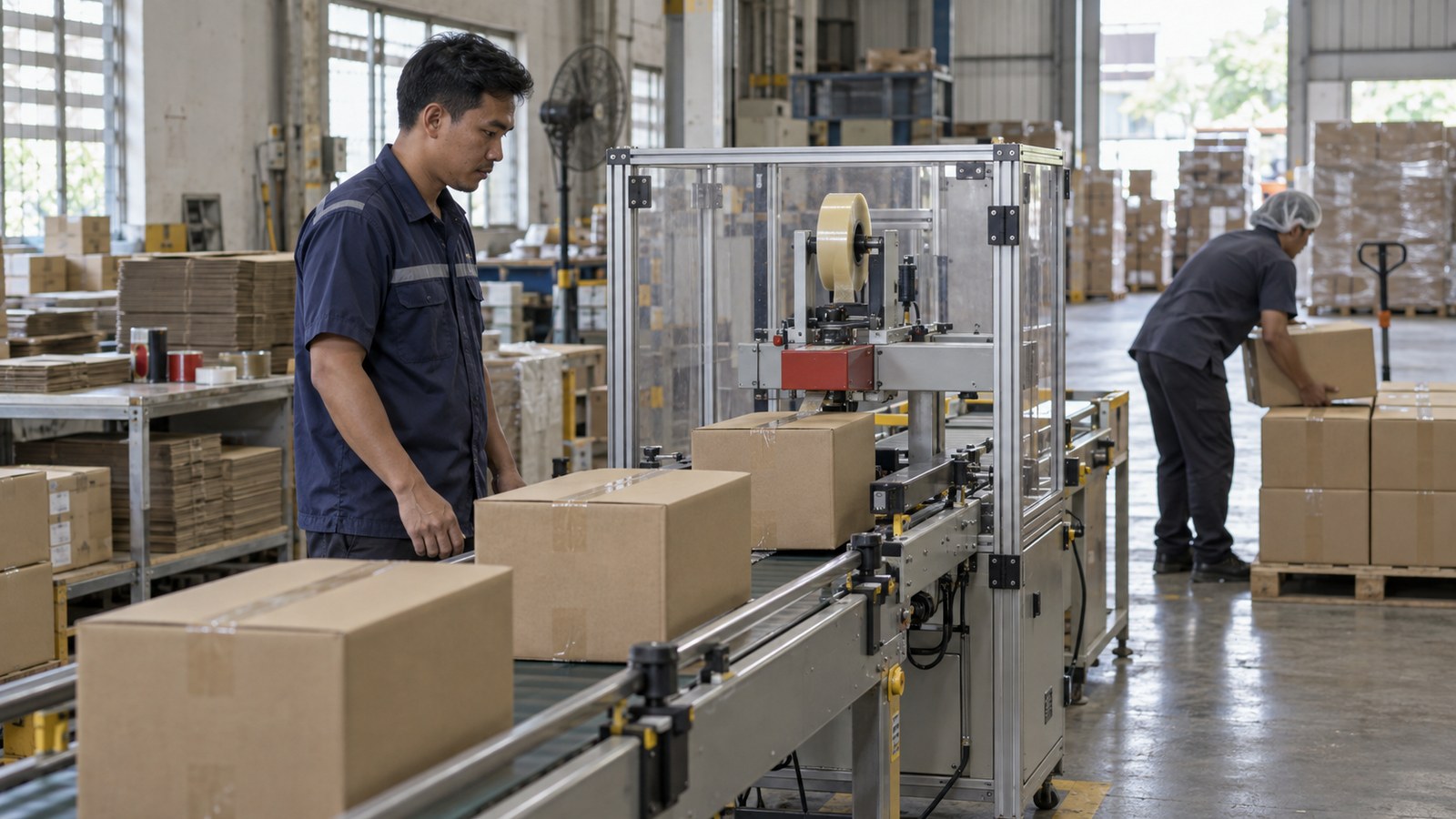
Source: Free Malaysia Today, Local firms must accelerate automation, says minister, published 8 September 2026. Operational examples and planning checks above are Ing Heng’s general interpretation. The image is an AI-generated illustration of a generic factory operation.
Questions Business Owners Ask
What prompted Malaysia's latest SME automation discussion?
On 8 September 2026, Free Malaysia Today reported the investment, trade and industry minister's call for firms of all sizes to accelerate automation, citing uncertainty about future foreign-worker supply.
Which production step should an SME automate first?
Start by measuring where unfinished work queues, delays or repeated handling occur. Test whether improving that step increases usable finished output before choosing a machine. This is planning guidance, not a government requirement.
What should a supplier demonstrate before an equipment order?
Ask for a trial using your materials and product sizes, including changeovers, rejected output, operator training and maintenance access. Confirm installation requirements and acceptance criteria in writing.