BNM Wants More Malaysian SMEs To Grow Into Mid-Tier Companies. What Supply-Chain Businesses Should Watch Next
BusinessToday reported on August 12, 2026 that Bank Negara Malaysia wants more SMEs to grow into stronger mid-tier companies that can anchor domestic supply chains. For Malaysian business owners, the practical issue is whether financing, order readiness, and capability upgrades are moving together.
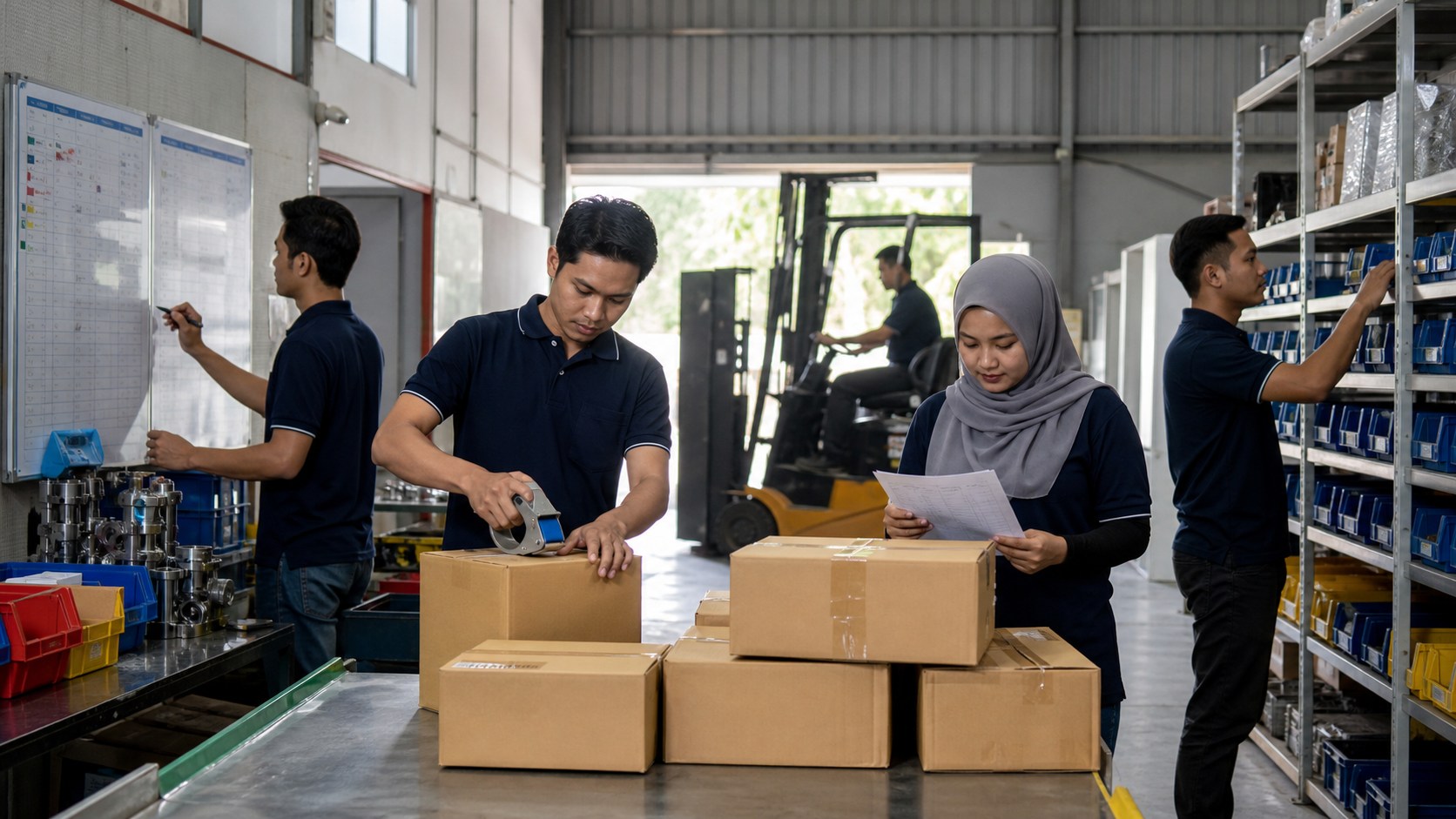
If bigger contracts are starting to appear, the useful question is not whether your business wants to grow. It is whether your operations, cash timing, and delivery discipline are strong enough to carry that growth without creating a new bottleneck.
BusinessToday reported on August 12, 2026 that Bank Negara Malaysia wants more SMEs to grow into stronger mid-tier companies that can anchor domestic supply chains and compete internationally. The report was tied to Governor Datuk Seri Abdul Rasheed Ghaffour’s special address at the 31st CGC Awards on August 11, 2026, where he said Malaysia needs more SMEs that can move beyond small-scale survival and become more capable businesses.
For Malaysian SMEs, this is not just a financing story. It is a signal that the market is rewarding businesses that can combine funding, management strength, technology use, and order execution well enough to take on more complex roles in local supply chains.
What Happened At The CGC Awards
According to BusinessToday and BNM’s published speech, the governor said SMEs now account for about 40% of Malaysia’s gross domestic product and almost half of total employment, making them central to the country’s next growth phase.
He also said Malaysia is entering that phase from a relatively solid base, with the economy growing 5.4% in the first quarter of 2026, unemployment easing to 2.9%, and headline inflation at 1.6%. At the same time, he said many SMEs still face higher input costs, tighter margins, supply-chain disruptions, and slower customer payments.
That combination explains why BNM is pushing a broader message. More financing matters, but financing alone is not enough if a business still struggles with order visibility, weak processes, ageing equipment, or inconsistent collections.
Why The Mid-Tier Push Matters For Malaysian SMEs
The search intent behind this story is straightforward: what does BNM’s push for more mid-tier SMEs mean if you run a Malaysian business that wants to win larger jobs, serve bigger buyers, or become part of a stronger domestic supply chain?
The first implication is capability pressure. Businesses that want to move up the chain may need better production discipline, cleaner delivery records, stronger stock control, and more predictable customer servicing than they needed before.
The second implication is data and credit-readiness pressure. In the speech, Abdul Rasheed said viable businesses are not always captured well by conventional lending tests, especially when they are younger, asset-light, or still building a longer credit record. He pointed to cash flows, transaction records, electronic invoices, payment behaviour, and supply-chain information as data that can help lenders assess businesses more completely.
The third implication is growth timing pressure. Some SMEs may see new opportunities and assume the answer is to expand immediately. In practice, bigger contracts often expose weak delivery systems, thin working capital, or old equipment faster than they produce stable cash.
What Businesses Should Check Before Chasing Bigger Supply-Chain Roles
If your business wants to grow into a more credible mid-tier operator, the useful checks are practical:
- confirmed order book strength, not just informal interest
- customer payment behaviour and collection speed
- uptime of vehicles, machinery, or warehouse assets
- staffing depth, training, and process discipline
- whether new financing solves a real bottleneck or only adds fixed cost
This is where a business may need to compare equipment financing, commercial vehicle financing, or loan financing against actual contract timing and operational stress.
It also helps to read this together with our earlier explainers on Malaysia’s June business-loan growth and Malaysia’s 2025 MSME GDP contribution. Those stories point to the same underlying issue: stronger opportunity matters only when the business behind it is ready to scale responsibly.
What To Watch Next
BNM also used the August 11 speech to launch a RM10 billion BNM-CGC Guarantee Scheme aimed at supporting microenterprises, start-ups, and firms investing in areas such as sustainability, innovation, strategic sectors, food security, and external resilience.
That matters as a policy direction, but it does not mean every SME should assume funding will solve every growth problem. The speech itself stressed that financing and capability-building must go hand in hand. If a business cannot show reliable operations, payment discipline, and practical use for new capital, financing can become strain instead of support.
The more useful signal to watch now is whether supply-chain opportunities are becoming more formal, whether your customers are committing more clearly, and whether your current assets can handle that step-up without forcing reactive spending later.
Where Ing Heng Fits
Ing Heng fits this story as a planning checkpoint, not a shortcut to expansion.
If your business is starting to win larger jobs or supply-linked work and needs equipment, vehicles, or capacity support to deliver properly, the better move is to test financing against confirmed demand, collections, and utilisation. A stronger growth narrative is helpful, but it does not replace careful timing.
News Source
- BusinessToday. “BNM: Malaysia Needs More SMEs To Grow Into Mid-Tier Companies.” Published August 12, 2026. Source URL: https://www.businesstoday.com.my/2026/08/12/bnm-malaysia-needs-more-smes-to-grow-into-mid-tier-companies/
- Bank Negara Malaysia. “Governor’s Special Address at the 31st CGC Awards.” Delivered August 11, 2026 and published August 12, 2026. Source URL: https://www.bnm.gov.my/-/g-spch-31st-cgc-awards
Questions Business Owners Ask
What did BNM say about Malaysian SMEs in August 2026?
BusinessToday reported on August 12, 2026 that Bank Negara Malaysia wants more SMEs to grow into stronger mid-tier companies that can anchor domestic supply chains and compete internationally.
Why does the mid-tier SME push matter for smaller businesses?
It signals that lenders, policymakers, and supply-chain partners are looking beyond survival financing toward businesses that can deliver consistently, adopt technology, and handle larger contracts responsibly.
What is the RM10 billion BNM-CGC Guarantee Scheme meant to support?
In the governor's August 11, 2026 CGC Awards speech, BNM said the scheme is designed to support microenterprises, start-ups, and firms investing in sustainability, innovation, strategic sectors, food security, and external resilience.
What should SMEs check before chasing bigger supply-chain roles?
They should review confirmed orders, payment timing, working-capital pressure, equipment uptime, staff capability, and whether any new financing supports a real operating bottleneck instead of a hopeful forecast.