Malaysia To Review SKDS Diesel Quotas. What Goods-Transport SMEs Should Recheck Now
Bernama reported on 27 June 2026 that Malaysia will review fixed SKDS subsidised-diesel quotas and expand support to some business-registered diesel pickups and jeeps. For goods-transport SMEs, the practical issue is whether route costing, quota assumptions, and July-August cash-flow planning need to be updated.
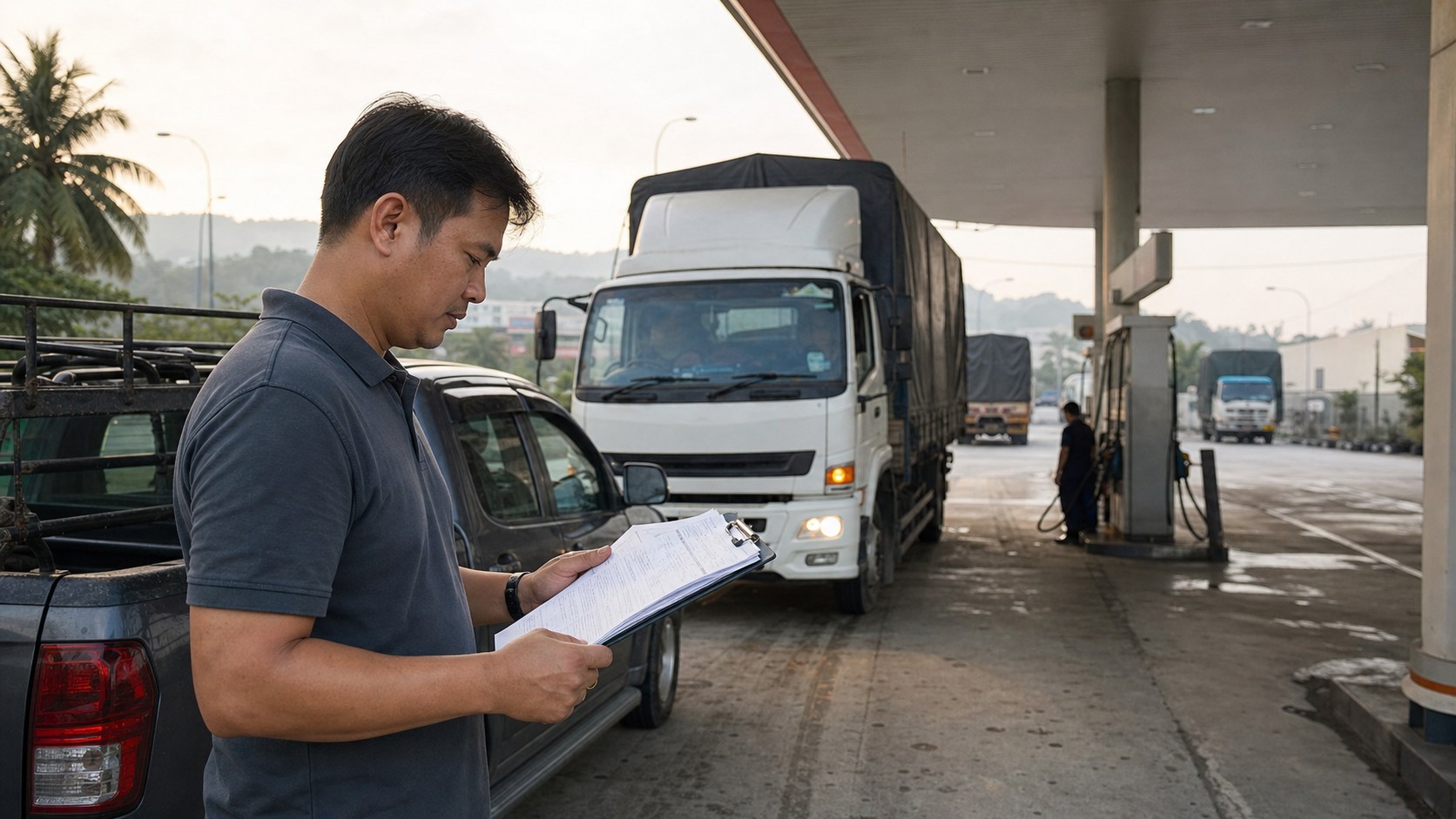
If your business runs lorries, company pickups, or delivery vehicles, the useful diesel question is no longer just the pump price. It is whether the quota assumptions behind your route costing are still realistic. Bernama reported on 27 June 2026 that the government will review fixed subsidised-diesel quotas under SKDS and also widen support to some business-registered diesel pickups and jeeps.
That matters because many smaller operators budget fuel support using rough vehicle categories. If the quota formula and eligibility line are changing again, goods-transport SMEs may need to recheck margins, job pricing, and how much cash buffer they need before the next operating month.
What Happened
According to Bernama, the Cabinet decided to review the fixed quota rates for several types of land transport vehicles carrying goods under the Subsidised Diesel Control System (SKDS). Domestic Trade and Cost of Living Minister Datuk Armizan Mohd Ali said the goal is to make subsidy distribution more accurate and better aligned with actual operating needs.
The report said the planned adjustment, expected by August 2026, will no longer rely only on average fuel use by vehicle type. Instead, the review is expected to consider technical factors such as:
- weight with load
- engine capacity
- lorry category
- fuel consumption level
- vehicle operating pattern
Bernama also reported that the Cabinet agreed to expand subsidy distribution to small traders using diesel vehicles such as jeeps and pickups registered under a business or company for private business use. That is notable because the minister said diesel-subsidy eligibility had previously been limited to individual-owned vehicles under BUDI Diesel and goods-transport business vehicles under SKDS.
The same report said eligible owners of private diesel jeeps and pickups under BUDI Diesel can apply for an additional 100 litres, bringing the total from the basic 200 litres to 300 litres, through the official BUDI MADANI portal or physical application support at LHDN offices.
Why It Matters For Goods-Transport SMEs
This is more than an administrative update. It changes how operators should think about fuel support in day-to-day planning.
A fixed quota that treats similar vehicle classes the same can miss real differences in load profile and usage. Two lorries may look similar on paper while burning very different amounts of diesel because of route pattern, payload, or engine size. If the government is moving toward a more technical quota method, some businesses may find their old budgeting assumptions too loose, while others may see room for better support fit.
The expansion for business-registered pickups and jeeps matters for smaller contractors, traders, field-service firms, and owner-managed companies that do not operate like large haulage fleets but still depend on diesel vehicles every week. That makes this story relevant beyond logistics companies alone.
It also has direct search value for Malaysian business readers because the real question is practical: if diesel support rules are shifting again, what should a small operator check before assuming July and August fuel costs will behave the same way?
What Operators Should Watch Next
The first thing to watch is timing. Bernama reported that the quota adjustment is expected by August 2026, not immediately. Businesses should avoid assuming a better quota is already in place until the operating mechanism is formally implemented.
The second thing to watch is vehicle classification. If your business uses pickups or jeeps registered under a company name for private business use, this change may matter more than a generic diesel headline. Check whether your registration class, use pattern, and application path actually fit the expanded support line described in the report.
The third thing to watch is cash-flow stress between policy and practice. A support decision on paper does not remove the need to pay for fuel, instalments, maintenance, wages, and delayed customer collections in the meantime. Operators should therefore compare:
- expected monthly diesel usage
- confirmed eligibility status
- timing of any quota change or application approval
- whether current instalments still leave enough buffer if support arrives later than hoped
If you are already recalculating fleet costs for the 1 July 2026 diesel framework, this update is best read alongside Malaysia’s RM2.10 diesel shift and what operators should watch. The point is not to chase every headline. It is to avoid pricing jobs or adding vehicles using an outdated fuel-support assumption.
Where Ing Heng Fits
Ing Heng fits this story at the planning stage, not the policy stage. If your business needs to replace a vehicle, restructure instalments, or preserve working-capital room while diesel support rules are still settling, the financing question should be tested against real route economics, not hopeful assumptions.
Sometimes the right move is not to delay every decision. It is to make sure the next vehicle or funding commitment still works if fuel support timing, quota level, or collection cycles do not move exactly as expected. That is where a practical review of loan financing or equipment financing can help.
News Source
- BERNAMA. “Govt To Review Fixed Quota For SKDS Subsidised Diesel.” Published 27 June 2026. Source URL: https://www.bernama.com/en/general/news.php?id=2573802
Questions Business Owners Ask
What did Malaysia say about SKDS diesel quotas on 27 June 2026?
Bernama reported that the government will review fixed subsidised-diesel quota rates under SKDS so they better match actual operating needs for goods-transport vehicles.
Which smaller businesses could benefit from the expansion mentioned in the report?
The report said the Cabinet agreed to expand diesel-subsidy distribution to small traders using diesel vehicles such as jeeps and pickups registered under a business or company for private business use.
Have the revised SKDS technical quota details already been published?
No full revised quota matrix was published in the source. The report said the changes are expected by August and will consider factors such as load weight, engine capacity, vehicle category, fuel consumption, and operating pattern.
Related News
Subsidy
Malaysia's RM15 Billion MSME Support Push Matters. What Small Businesses Should Check Before Cash Flow Tightens

Subsidy
Malaysia's RM2.10 Diesel Price From July 1 Matters If Your Business Runs On Transport

Subsidy