Jabil's New Penang Logistics Hub Could Tighten Automation Pressure For Suppliers. What SMEs Should Watch Now
BusinessToday reported on July 16, 2026 that Jabil opened a 417,000-sq-ft intelligent logistics hub in Penang. For Malaysian manufacturers, suppliers, and service SMEs, the practical issue is whether faster inventory flow and automation standards will start raising capacity expectations across the wider industrial chain.
If your business supplies factories, handles warehouse movement, supports industrial transport, or depends on steady material flow, this is the kind of investment that can change operating expectations before it changes your revenue line.
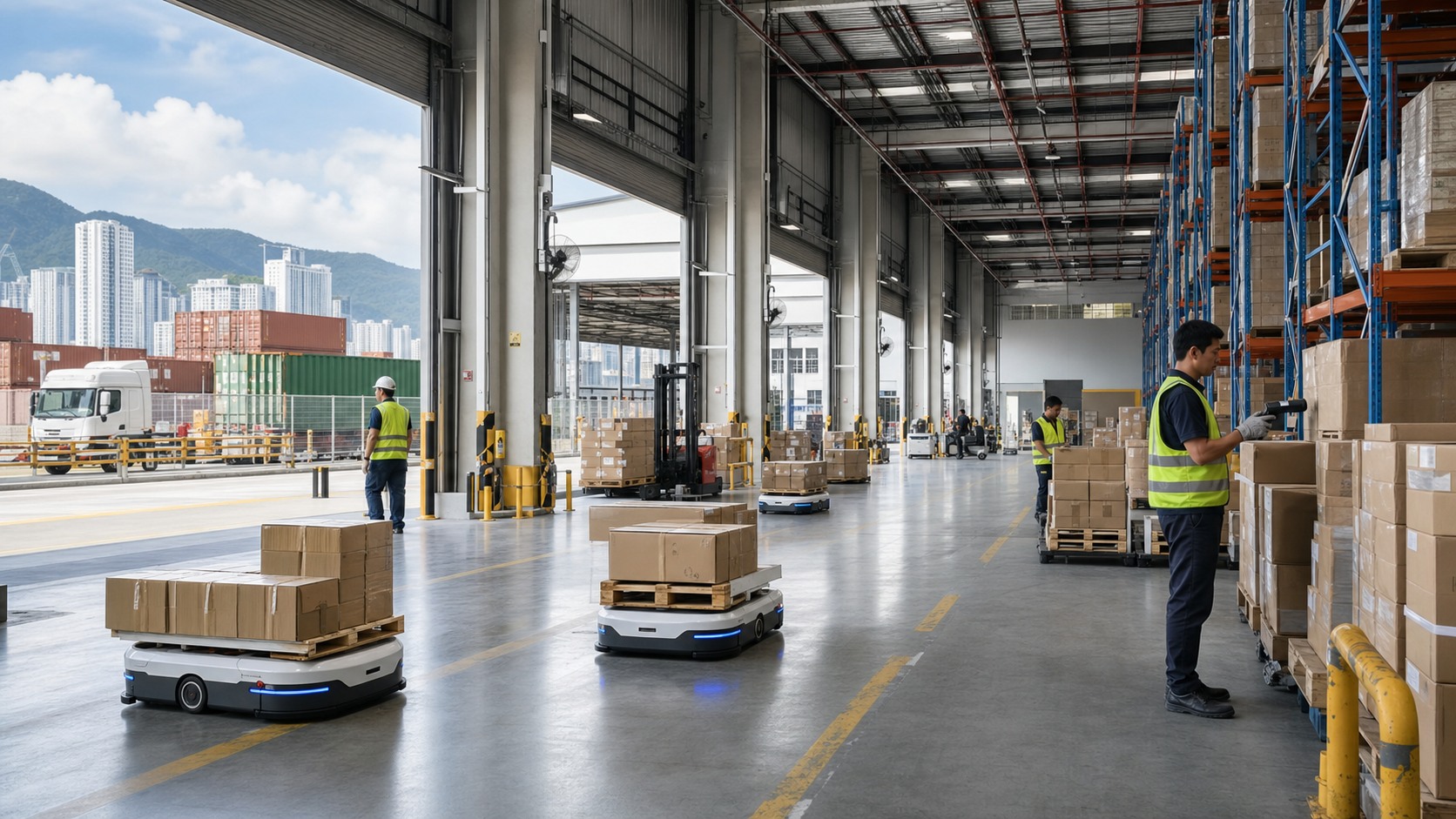
BusinessToday reported on July 16, 2026 that Jabil opened a 417,000-square-foot intelligent logistics hub in Penang, at Valdor Industrial Park in Sungai Jawi. The report said the facility uses artificial intelligence, autonomous robots, and automated storage systems to improve inventory management, traceability, and material flow.
For Malaysian SMEs, the practical question is not whether Jabil is growing. It is whether bigger manufacturers are now raising the baseline for speed, stock visibility, and supplier responsiveness across the wider industrial chain.
What Happened
According to BusinessToday, Jabil’s new Penang facility is designed to support more complex manufacturing requirements while helping the company manage supply-chain volatility, rising logistics costs, and growing capacity needs in the region.
The report said the hub will handle functions such as:
- kitting
- sequencing
- packing
- cross-docking
- automated storage and retrieval
- just-in-time delivery to production lines
BusinessToday also noted that Jabil now operates eight facilities in Malaysia, employs more than 14,000 people, and supports industries including automotive, data centres, aerospace, healthcare, and semiconductor equipment.
Why It Matters For Malaysian SMEs
Large automation investments do not affect only the company cutting the ribbon. They often reshape what nearby customers and principals start expecting from smaller suppliers, transport partners, warehouse operators, and service contractors.
That can show up in practical ways:
- shorter replenishment windows
- tighter delivery accuracy requirements
- more pressure to track stock and material movement clearly
- higher expectations on turnaround time for support work
For SMEs in Penang’s manufacturing corridor, that means the issue is not only demand growth. It is whether your current operation can keep up if customers start asking for faster, cleaner, and more traceable fulfilment.
Why The Automation Angle Matters Now
The key signal in this story is not just warehouse size. It is the combination of automation and logistics discipline.
When a major manufacturer puts more weight on robotics, traceability, and just-in-time flow, smaller businesses around it can feel pressure to respond even if they are not building a high-tech facility themselves. A supplier may need a more dependable forklift. A transport operator may need tighter dispatch discipline. A warehouse support firm may need better stock handling or one more machine to remove a bottleneck.
That is where the business implication becomes real. The gap is often not strategy. It is whether the business can fund readiness without pulling too much cash away from payroll, materials, fuel, or ordinary operations.
What Owners Should Watch Next
The useful watchpoints are operational, not promotional.
Check whether:
- customers are starting to ask for faster turnaround or better stock visibility
- one extra forklift, reach truck, van, or loading asset would remove a real bottleneck
- supplier purchases are landing before your own collections catch up
- your current workflow can handle more frequent, smaller, and more time-sensitive movements
If those signals are building, it may help to compare this trend with other industrial-readiness stories such as Penang’s wider manufacturing infrastructure pressure or Subang’s logistics build-out for specialist suppliers.
Where Ing Heng Fits
Ing Heng fits at the planning edge of this story. If automation pressure is pushing your business to add warehouse equipment, support vehicles, material-handling tools, or working-capital room, the better move is usually to review funding before timing gaps become expensive.
This article is a market explainer first, not a financing pitch. The practical takeaway is simple: when larger manufacturers speed up logistics discipline, SMEs should check whether their own capacity can keep pace without straining cash flow.
News Source
- BusinessToday. “Jabil Deepens Malaysia Footprint With 417,000-Sq-Ft Intelligent Logistics Hub.” Published July 16, 2026. Source URL: https://www.businesstoday.com.my/2026/07/16/jabil-deepens-malaysia-footprint-with-417000-sq-ft-intelligent-logistics-hub/
Questions Business Owners Ask
What did BusinessToday report on July 16, 2026?
BusinessToday reported that Jabil opened a 417,000-square-foot intelligent logistics hub in Penang at Valdor Industrial Park in Sungai Jawi.
Why does this matter to Malaysian SMEs?
Because a larger automation-led logistics setup can raise customer expectations on delivery speed, inventory accuracy, traceability, and supplier readiness across the surrounding manufacturing ecosystem.
What technology is Jabil using at the new hub?
BusinessToday said the facility uses artificial intelligence, autonomous robots, and automated storage systems to improve inventory management, traceability, and material flow.
Related News
Malaysia Economy News
Malaysia's Petroleum Reserve Study Could Change How Fuel-Exposed SMEs Plan Risk
Malaysia Economy News
Malaysia's LSS6 Solar Push Could Pull Contractor And Supplier Timelines Forward

Malaysia Economy News