Malaysia's July Factory Orders Improved. Why SMEs Should Still Be Careful With Hiring And Capacity
BusinessToday reported on August 4, 2026 that Malaysia's manufacturing PMI held at 50.7 in July while new orders rose at the fastest pace in eight months. For Malaysian SMEs, the practical question is whether improving factory demand is strong enough to justify new hiring, inventory builds, or equipment commitments.
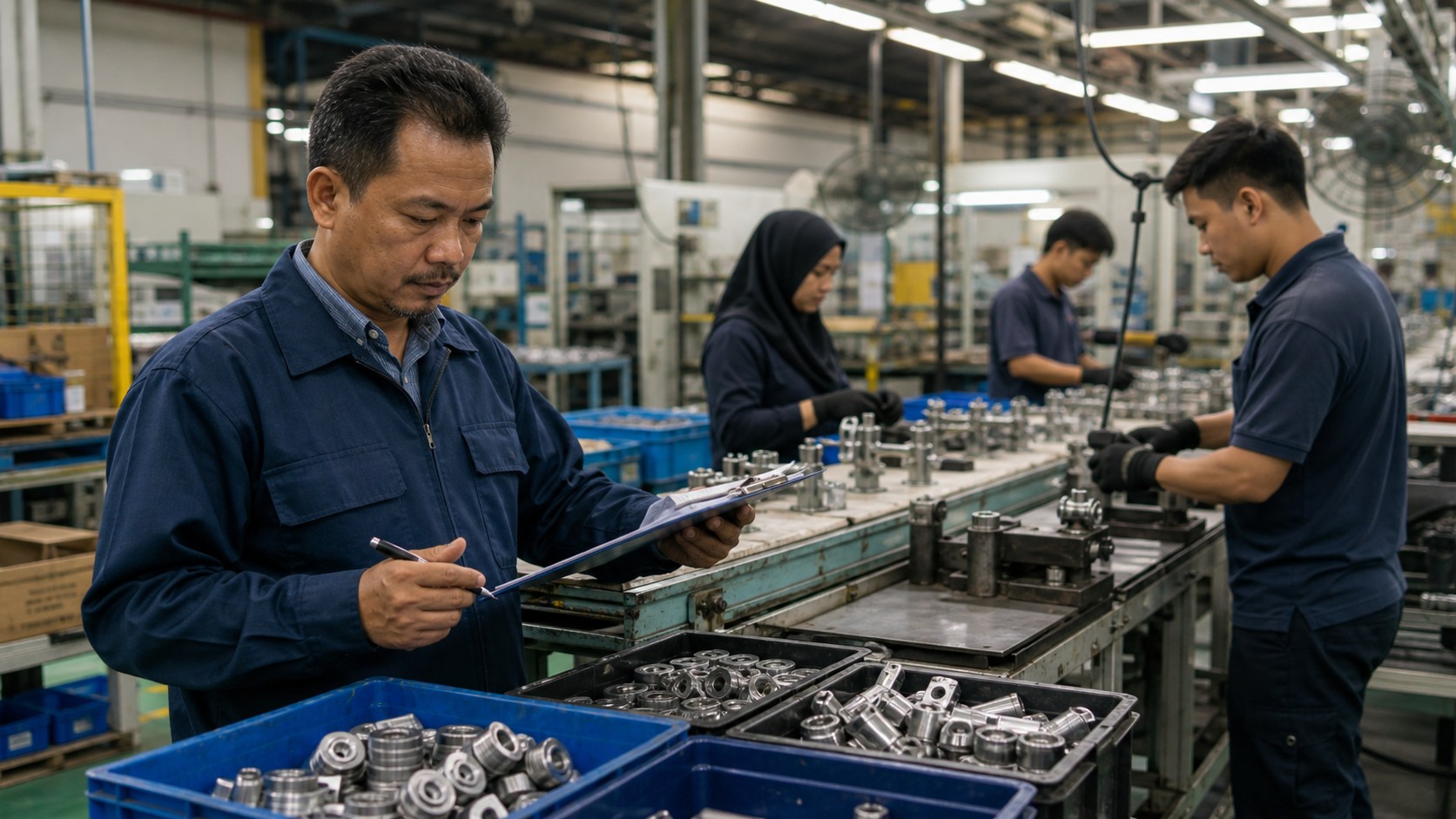
If orders are improving but employers are still cautious about hiring, the signal is not “expand at any cost.” The signal is that demand may be getting better faster than confidence is.
BusinessToday reported on August 4, 2026 that Malaysia’s manufacturing PMI held at 50.7 in July, staying above the 50-point line that marks expansion. The same report said new orders rose at the fastest pace in eight months, while employment declined and business confidence slipped to a three-month low.
For Malaysian SMEs, that mix matters more than the headline alone. A steady PMI reading can look reassuring, but the practical question is whether your own order flow is strong enough to support new stock, extra staff, or equipment spending without creating new cash pressure.
What Happened In July
According to BusinessToday, citing a Kenanga Research note, Malaysia’s factory activity stayed in expansion territory in July even as global conditions remained uncertain.
The report said the PMI was unchanged at 50.7, showing that manufacturing activity still improved overall from the month before. More importantly for day-to-day operators, new orders accelerated to their fastest pace in eight months, helped by repeat business, stronger customer demand, new product launches, and fresh tenders.
Production also expanded, but not much faster than in June. That suggests businesses are still adding output carefully instead of rushing to scale up all at once.
The same report said input cost inflation eased to a five-month low, although firms still faced higher fuel, freight, transport, and raw-material costs. Output-price inflation also eased, which indicates some producers continued absorbing part of the pressure instead of fully passing it on.
Why This Matters For Malaysian SMEs
The search intent behind this story is straightforward: if Malaysia’s factory orders are improving, what should SMEs do before increasing hiring, inventory, or equipment capacity?
The first issue is order quality. More orders are useful only if they are repeatable, profitable, and tied to customers who pay on time. A short burst of enquiries or tenders is not the same as durable demand.
The second issue is timing risk. If orders improve before confidence improves, businesses can get squeezed between rising operating activity and cautious customer payment behaviour. That is often when inventory builds, overtime, and emergency asset spending start to pressure cash flow.
The third issue is capacity discipline. The July data suggests some businesses are seeing enough demand to keep expanding, but not enough certainty to hire freely. That is a practical reminder for SMEs to add capacity only where it solves a real bottleneck.
For manufacturers, wholesalers, workshop operators, and logistics-linked SMEs, this is a good time to compare confirmed work against the assets needed to deliver it. If an older machine, vehicle, or handling setup is already slowing jobs down, planned financing can make sense. If the business case still depends on optimistic assumptions, the risk is different.
What To Check Before You Expand
Before adding fixed costs, look at the operating signals that usually move ahead of financial strain:
- confirmed orders versus tentative enquiries
- receivables collection speed
- supplier lead times and quote validity
- inventory turnover
- maintenance or replacement urgency
If your business needs a practical financing review, it helps to compare equipment financing, commercial vehicle financing, or loan financing against how quickly the added asset can produce revenue, reduce downtime, or shorten fulfilment time.
You can also compare this signal with our explainers on Malaysia’s business-loan growth in June 2026 and Malaysia’s softer Leading Index in May 2026. Together, they show why stronger activity data does not always remove the need for cautious timing.
What To Watch Next
The next few months matter more than a single PMI print.
If stronger new orders begin turning into steadier production, healthier hiring, and more confident inventory rebuilding, that would support a broader expansion story. If not, SMEs may still be dealing with a market where work is improving but operating confidence remains uneven.
That difference matters because businesses rarely get into trouble by missing a headline. They get into trouble by locking in repayments or payroll before the order cycle is stable enough to carry them.
Where Ing Heng Fits
Ing Heng fits this story as a planning checkpoint, not a reason to over-expand.
If your business is seeing better demand and needs machinery, vehicles, or operational assets to keep up, the useful step is to test repayment timing against real order flow, collections, and downtime risk. Better factory orders are encouraging, but they do not remove the need to stage capacity carefully.
News Source
- BusinessToday. “Malaysia’s Factory Activity To Remain Elevated In Coming Months, Says Kenanga.” Published August 4, 2026. Source URL: https://www.businesstoday.com.my/2026/08/04/malaysias-factory-activity-to-remain-elevated-in-coming-months-says-kenanga/
- S&P Global. “S&P Global Malaysia Manufacturing PMI.” Released August 3, 2026. Source URL: https://www.pmi.spglobal.com/Public/Home/PressRelease/7171bf5c418d4a9894acc61ad4b52aa5
Questions Business Owners Ask
What happened to Malaysia's manufacturing PMI in July 2026?
BusinessToday reported on August 4, 2026 that Malaysia's manufacturing PMI held at 50.7 in July, which kept the sector in expansion territory for another month.
Why are stronger new orders important for Malaysian SMEs?
The report said new orders rose at the fastest pace in eight months, which can signal better demand visibility for suppliers, manufacturers, service contractors, and logistics businesses.
Why should SMEs still stay careful if the PMI is above 50?
The same report said confidence slipped to a three-month low and employment declined, which suggests many firms still see enough uncertainty to stay cautious about costs.
What should businesses check before expanding capacity?
They should compare confirmed orders, customer payment timing, inventory turnover, and equipment urgency before adding fixed repayment or payroll commitments.
Related News

Malaysia Economy News
Malaysia's Fuel Subsidy Exposure Is Still A Cost-Planning Signal For SMEs
Malaysia Economy News
Sunway's RM1.044 Billion US Tech Fit-Out Job Could Tighten Contractor Capacity
Malaysia Economy News
