Malaysia's July 2026 Inflation Eased. SMEs Still Need To Watch Food And Utility Cost Timing
BusinessToday reported on August 17, 2026 that Malaysia's headline inflation eased to 1.8% in July as transport pressure cooled. For Malaysian SMEs, the practical issue is that food and utility-related costs still moved higher, so pricing, stock, and cash-flow timing may remain uneven.
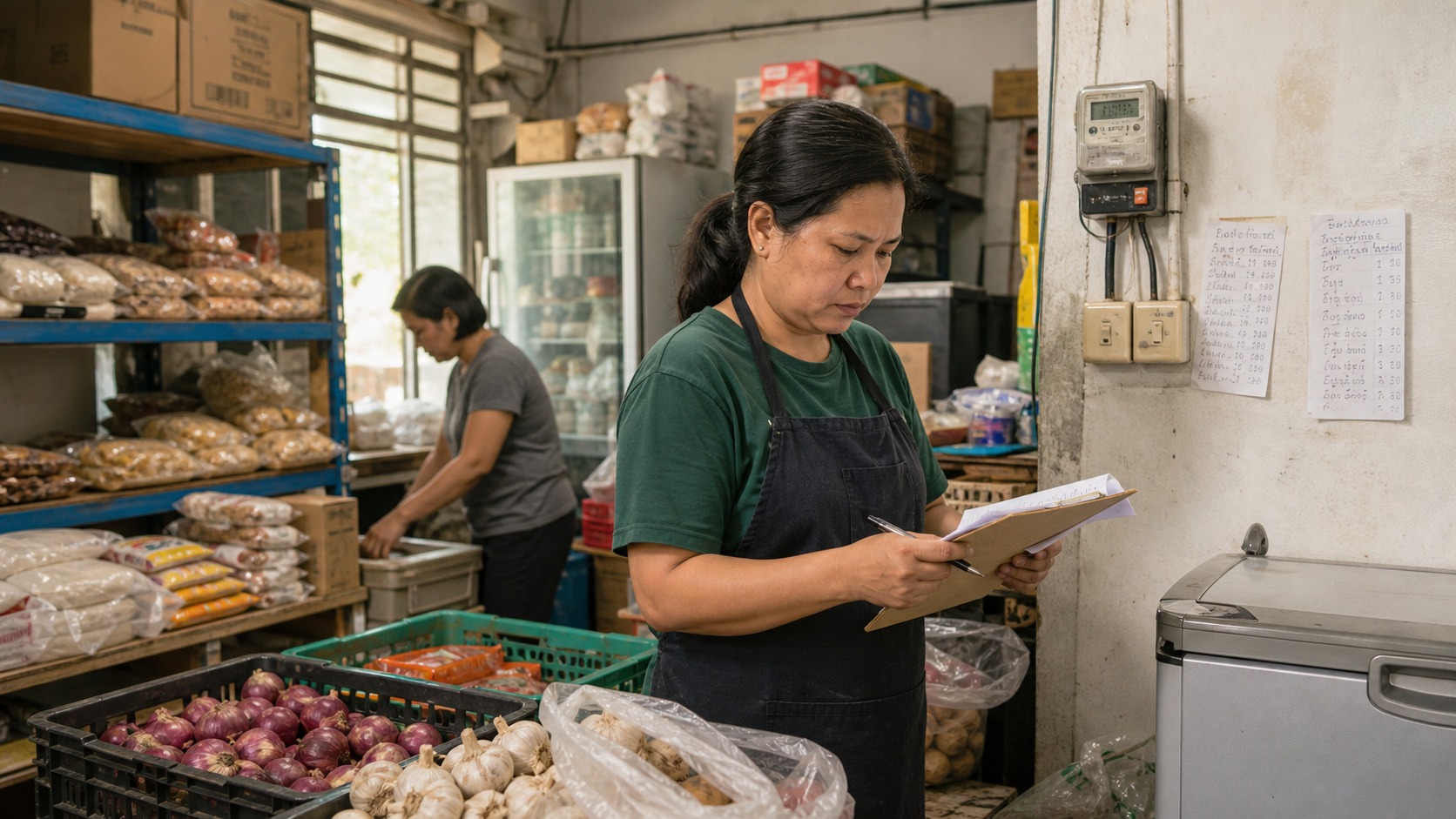
If the headline sounds calmer but your monthly costs still feel awkward, that is the real business signal in this inflation release.
BusinessToday reported on August 17, 2026 that Malaysia’s headline inflation eased to 1.8% in July 2026, down from 1.9% in June, citing the Department of Statistics Malaysia (DOSM). The main relief came from transport, which slowed to 1.4% from 2.8% after lower fuel prices and targeted diesel subsidies helped moderate that part of the basket.
For Malaysian SMEs, that does not mean cost pressure has disappeared. DOSM’s July release also showed Food & Beverages rising to 1.8% from 1.4%, while Housing, Water, Electricity, Gas & Other Fuels also increased to 1.8% from 1.4%. In plain terms, one pressure line eased, but two practical operating lines became firmer.
What Happened In July 2026
According to BusinessToday and DOSM, Malaysia’s Consumer Price Index reached 137.1 points in July 2026, up from 134.7 points a year earlier.
The most obvious moderation came from transport, which slowed sharply year on year. That matters for delivery-heavy businesses, route operators, and SMEs that rely on regular site movement or fuel-linked supplier charges.
But the July release was not only a softer-transport story.
DOSM said Food & Beverages, the largest CPI component with a 29.8% weight, rose faster in July. The increase was driven by both food away from home, which edged up to 2.5% from 2.4%, and food at home, which accelerated to 1.2% from 0.5%.
The official release also showed Housing, Water, Electricity, Gas & Other Fuels rising more quickly than in June. That is important because many SMEs feel those changes through utilities, premises-related bills, chilled storage, kitchen operations, light manufacturing, and routine daily overhead before they feel relief from slower transport inflation.
Core inflation also eased to 1.8% from 1.9%, which supports the view that broad inflation pressure is not accelerating aggressively. But for an owner managing weekly payments, the more practical issue is where costs are still rising inside the business.
Why This Matters For Malaysian SMEs
The search intent behind this story is direct: what does a softer July inflation number actually mean if food and utility costs are still rising?
The first answer is that headline relief can hide category pressure. If your business depends on food inputs, hospitality demand, cold storage, shop utilities, or frequent small-batch replenishment, July may not feel easier even if the national inflation rate slowed slightly.
The second answer is that cash timing still matters more than the headline. A business can absorb a modest price increase when customer collections remain smooth. The same increase becomes a problem when supplier invoices, utility bills, and payroll move first while receivables remain slow.
The third answer is that pricing decisions may stay uneven. Some operators can pass higher food or utility costs through quickly. Others are locked into menus, quotations, seasonal promotions, contract pricing, or customer expectations that move much more slowly.
That is why this release is more useful as a planning signal than as a comfort headline.
What Owners Should Watch Next
Look at the next few billing and stock cycles instead of assuming the softer headline solves the problem.
Check whether these items are moving together:
- supplier quotations for food, packaging, or routine operating inputs
- utility and premises-related costs
- stock turn speed and reorder frequency
- customer payment timing
- any planned replacement of equipment, chillers, vehicles, or handling assets
If you are comparing broader cost signals, it helps to read this together with our earlier explainers on Malaysia’s May 2026 inflation move and Malaysia’s Q2 2026 service-price pressure. Together, they point to the same issue: headline inflation can look manageable while specific cost lines still create operating stress.
For businesses where rising cost timing starts affecting stock preparation, equipment reliability, or replacement plans, it may also help to compare equipment financing, loan financing, or commercial vehicle financing against actual collections and repayment room rather than waiting for pressure to become urgent.
Where Ing Heng Fits
Ing Heng fits this story only at the planning stage.
If your business is dealing with uneven input costs and needs to protect working capital while still replacing a necessary asset or smoothing payment timing, the useful move is to test financing against real operating cash flow. Softer headline inflation is not a reason to relax discipline. It is a reminder to look past the headline and check which costs are still moving inside your business.
News Source
- BusinessToday. “Malaysia’s Headline Inflation Eases To 1.8% In July As Fuel Prices Fall.” Published August 17, 2026. Source URL: https://www.businesstoday.com.my/2026/08/17/malaysias-headline-inflation-eases-to-1-8-in-july-as-fuel-prices-fall/
- Department of Statistics Malaysia. “Consumer Price Index, July 2026.” Published August 2026. Source URL: https://storage.dosm.gov.my/cpi/cpi_2026-07.pdf
Questions Business Owners Ask
What happened to Malaysia's inflation in July 2026?
BusinessToday reported on August 17, 2026, citing DOSM, that Malaysia's headline inflation eased to 1.8% in July 2026 from 1.9% in June.
Which cost areas still rose faster in July 2026?
DOSM said Food and Beverages rose 1.8% from 1.4% in June, while Housing, Water, Electricity, Gas and Other Fuels also increased 1.8% from 1.4%.
Why does softer headline inflation not automatically reduce SME pressure?
Because transport eased, but food, utilities, and other operating costs can still move faster than selling prices or customer payments.
What should SMEs recheck after this inflation update?
They should review supplier quotations, stock turns, utility bills, customer payment timing, and whether any asset replacement or financing decision still fits current cash flow.
Related News
Malaysia Economy News
Malaysia's Fuel Subsidy Exposure Is Still A Cost-Planning Signal For SMEs
Malaysia Economy News
Sunway's RM1.044 Billion US Tech Fit-Out Job Could Tighten Contractor Capacity
Malaysia Economy News
