Global Supply Anxiety Returns: Malaysian SMEs May Feel It In Fuel, Parts And Machinery
A Bernama report on KazanForum 2026 puts global supply pressure back in focus. Malaysian SMEs should watch fuel, parts, machinery timing, and cash flow.
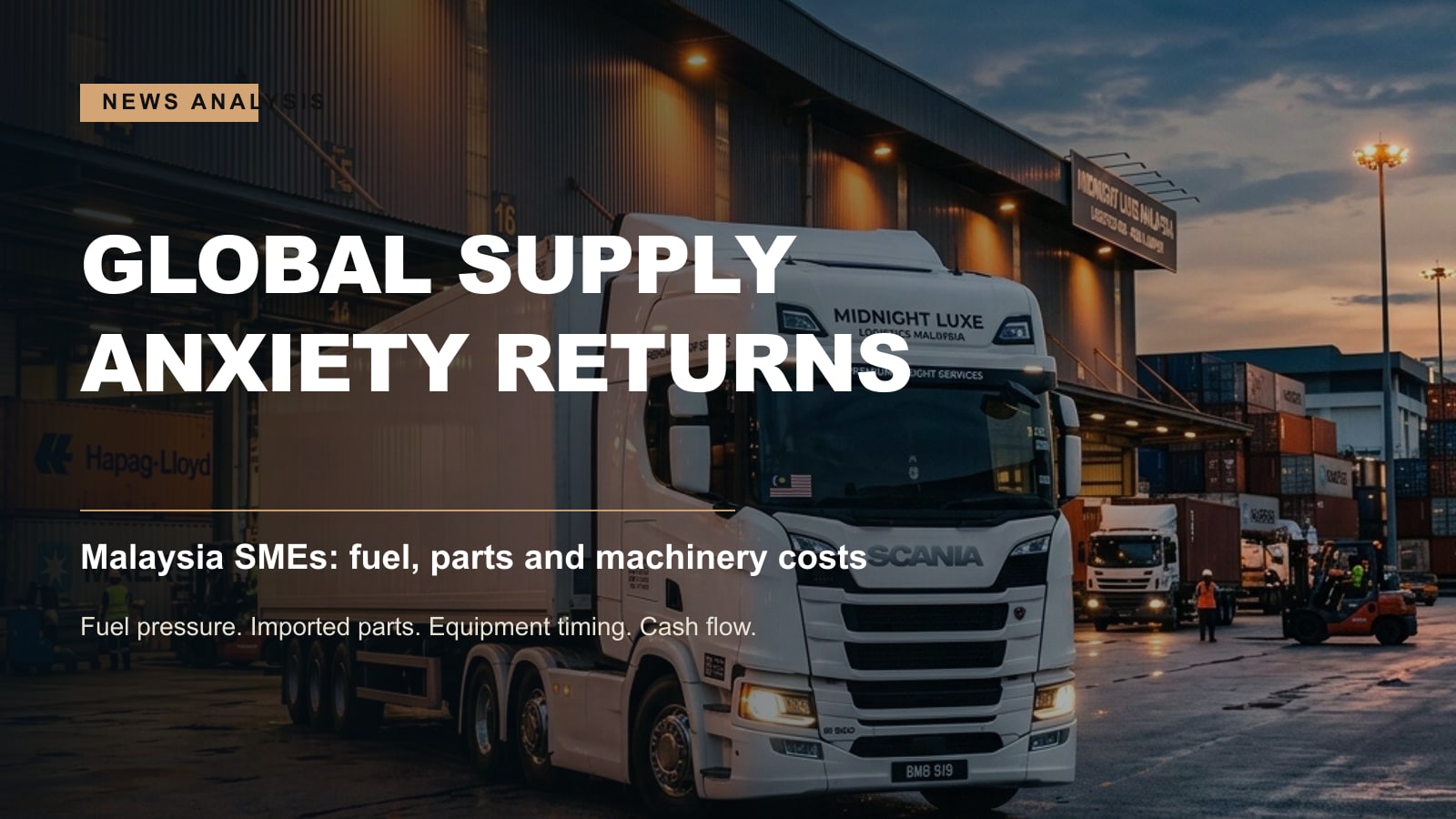
Global supply worries are moving back into business headlines, and Malaysian SMEs may not be able to treat them as distant foreign news.
BERNAMA reported on 17 May 2026 that KazanForum 2026 gathered officials, investors, and business leaders from more than 93 countries at a time when global trade activity is facing disruption. The report said the forum has become a platform for countries to seek alternative resources and strengthen cooperation as supply shortages worsen.
The article also reported that Malaysia is among Asian countries seeking oil supplies from Russia, with Russia’s Tatarstan region presented as a potential source because of its confirmed oil reserves.
For local business owners, the headline is not only about Russia, Kazan, or international diplomacy. The more immediate question is whether another round of supply pressure could reach Malaysian operating costs.
For SMEs, that usually shows up quietly at first. A supplier shortens the validity period on a quote. A spare part takes longer to arrive. A lorry repair becomes more expensive. A machinery dealer warns that the next shipment may cost more. A project owner delays payment while the contractor still needs to pay staff, diesel, tyres, and subcontractors.
That is why global supply news matters to Malaysian companies that rely on working assets.
The Pressure Point Is Not Only Oil
Oil supply gets the attention because fuel touches almost every business sector. Transport companies feel it directly. Contractors feel it through site movement, hauling, generators, and supplier delivery charges. Manufacturers feel it through logistics and input costs. Traders feel it when shipping and distribution become more expensive.
But fuel is only one part of the pressure.
The bigger issue for many SMEs is timing. When global trade becomes uncertain, business owners often face a combination of higher costs, slower decisions, and less room for mistakes.
Equipment-heavy companies are especially exposed. A construction firm may need an excavator before a project can start. A warehouse may need a forklift to keep deliveries moving. A logistics operator may need to replace a lorry before breakdowns affect customers. A factory may need one additional machine to meet orders.
If prices move while the owner is still waiting for financing, supplier confirmation, or customer payment, the business can lose both time and margin.
Cash Flow Becomes The Real Story
The practical risk for SMEs is not just that equipment becomes expensive. It is that equipment decisions start competing with operating cash.
A business owner may still need the asset. The job still has to be done. The customer still expects delivery. The project timeline still runs.
But if the company uses too much cash upfront, it may weaken its ability to handle the next surprise. A large deposit can reduce the buffer for payroll, diesel, service bills, parts, insurance, taxes, and project mobilization.
This is where the supply-chain story becomes a cash-flow story.
When the market is calm, paying more cash upfront can feel safe. When the market is unstable, preserving cash can be just as important as getting the lowest purchase price.
Business owners should therefore watch three signs over the next few months:
- Whether fuel and delivery costs become harder to predict.
- Whether imported parts, tyres, batteries, or machinery components take longer to source.
- Whether suppliers and dealers start giving shorter quote validity periods.
If those signs appear together, SMEs may need to make faster and more disciplined decisions about equipment replacement and financing.
The Sectors That May Feel It First
The first impact is likely to be felt by businesses where equipment downtime quickly becomes revenue loss.
In logistics, one unavailable lorry can affect delivery schedules and customer confidence. In construction, a delayed machine can affect site progress and claims. In manufacturing, a production bottleneck can create overtime costs or missed orders. In trading and warehousing, forklift or truck downtime can slow loading, unloading, and dispatch.
Used equipment may also become more attractive if new equipment prices rise or delivery windows stretch. That creates another decision point: used assets can help control cost, but buyers still need to check condition, parts availability, service support, and repayment comfort.
The worst move is to wait until a critical asset fails and then rush into a purchase under pressure.
What Business Owners Should Watch Next
The BERNAMA report is a signal, not a direct instruction. It does not mean every Malaysian SME should buy equipment immediately or change suppliers overnight.
It does mean owners should pay attention to cost and timing signals before they become urgent.
Useful questions include:
- Are current equipment quotations still valid for 30 days, or only a shorter period?
- Are dealers warning about shipment delays or price revisions?
- Are repair costs rising because parts are harder to source?
- Are customer payments becoming slower while operating costs continue?
- Would a large cash deposit weaken the business’s ability to handle the next 3 to 6 months?
These are not only finance questions. They are operational survival questions for companies that depend on vehicles, machinery, and working equipment.
Where Ing Heng Fits
For Malaysian SMEs that need machinery, commercial vehicles, forklifts, lorries, or other working assets, Ing Heng Credit can help review financing options before the business commits too much cash upfront. The goal is not to turn every news event into a sales pitch, but to help owners compare whether paying cash, using financing, or choosing a suitable used asset gives the business more room to operate.
If your company is watching equipment prices, supplier quote deadlines, or rising operating costs, speak with Ing Heng Credit before making the purchase decision. A financing structure may help secure the asset while keeping more cash available for fuel, parts, payroll, project costs, and day-to-day business pressure.
Source
- BERNAMA. “Kazan Is Slowly Returning To Its Former Glory.” Published 17 May 2026. Source URL: http://www.bernama.com/en/news.php?id=2558088