Malaysia's E-Commerce Income Hit RM1.29 Trillion. What SMEs Should Check Before Online Demand Gets Costly
BusinessToday reported on July 1, 2026 that Malaysia's e-commerce income reached RM1.29 trillion in 2024, with stronger business adoption of digital tools. For Malaysian SMEs, the practical question is whether stock, fulfilment, delivery, and cash-flow capacity are keeping up with online demand.
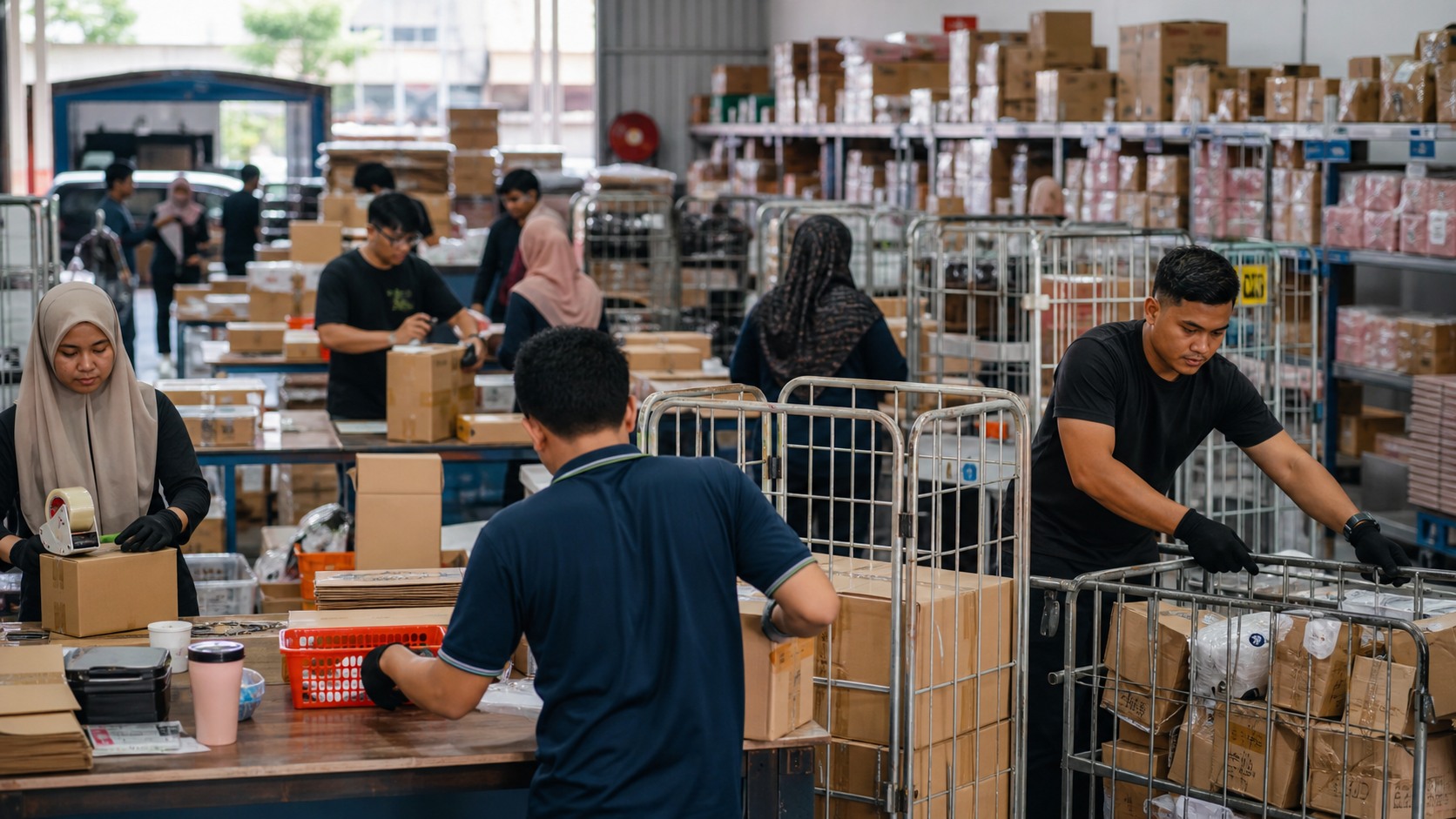
If your business is selling faster online, supplying online-first customers, or getting pulled into shorter delivery cycles, the headline is worth reading carefully. BusinessToday reported on July 1, 2026 that Malaysia’s e-commerce income reached RM1.29 trillion in 2024, up from RM1.18 trillion in 2023.
That sounds like a digital-economy milestone, but the day-to-day business question is more practical: can your stock, fulfilment, vehicles, and cash flow keep pace if online demand keeps raising expectations on speed and availability?
What Happened
According to BusinessToday, citing the Department of Statistics Malaysia, 97.2% of business establishments used computers in 2024, while 95.3% had internet access and 74.4% had a web presence. The report also said total e-commerce income rose 8.8% year on year.
The domestic market remained the main driver, contributing RM1.15 trillion, while international e-commerce income reached RM138 billion. By sector, services generated RM639.8 billion and manufacturing contributed RM633.5 billion.
BusinessToday also reported that business-to-business transactions reached RM879.6 billion, still the biggest share of e-commerce activity. That matters because Malaysia’s online growth is not only about consumer checkouts. It also reflects procurement, supplier ordering, replenishment, and inter-company trade moving through digital channels.
Why This Matters For Malaysian SMEs
For SMEs, stronger e-commerce does not just mean more sales opportunities. It can also mean tighter operating discipline.
When more orders move online, customers usually expect clearer stock visibility, faster response times, shorter delivery windows, and fewer fulfilment mistakes. Even businesses that do not see themselves as “e-commerce companies” can feel the pressure if their customers, dealers, distributors, or suppliers are becoming more digital.
The real operational questions are often these:
- are you holding enough stock without tying up too much cash
- can your team pack, load, or dispatch quickly enough during peak periods
- are delivery vehicles, forklifts, shelving, or warehouse tools starting to slow response time
- can customer payments keep up with the extra inventory and operating spend needed to support faster turnover
That is why this story has wider business relevance. A digital-commerce surge can reward businesses that are prepared, but it can also expose weak fulfilment systems, older delivery assets, or underfunded expansion plans.
What Owners Should Watch Next
The headline number alone should not push a business into expansion. What matters is whether online-linked demand is becoming repeatable and profitable.
For many SMEs, the next useful checks are:
- whether order volume is rising consistently or only during campaign spikes
- whether stock turnover is improving without creating overbuying risk
- whether delivery costs are rising faster than margins
- whether packaging, storage, or loading capacity is becoming a bottleneck
Businesses serving retail, distribution, spare parts, light manufacturing, food supply, or delivery-heavy sectors may also need to review whether a commercial vehicle financing plan or equipment financing solution fits their next stage better than draining working cash all at once.
The point is not to finance growth for its own sake. It is to avoid a situation where online demand looks healthy, but the business starts losing flexibility because inventory, transport, or warehouse needs are funded too late.
Where Ing Heng Fits
Ing Heng fits at the planning edge of this story. If stronger online trade is pushing you to add delivery capacity, warehouse equipment, or business-use assets, the useful move is to review your options before fulfilment pressure becomes urgent.
That can help preserve room for payroll, supplier payments, and ordinary monthly operations while you decide whether current demand is strong enough to support a bigger commitment.
News Source
- BusinessToday. “Malaysia’s E-Commerce Income Hits RM1.29 Trillion In 2024, As Adoption Expands.” Published July 1, 2026. Source URL: https://www.businesstoday.com.my/2026/07/01/malaysias-e-commerce-income-hits-rm1-29-trillion-in-2024-as-adoption-expands/
Questions Business Owners Ask
What did Malaysia's new e-commerce data show?
BusinessToday reported that Malaysia's e-commerce income reached RM1.29 trillion in 2024, up from RM1.18 trillion in 2023, while digital adoption among businesses also increased.
Which sectors contributed most to Malaysia's e-commerce income?
BusinessToday said the services sector recorded RM639.8 billion in e-commerce income, while manufacturing contributed RM633.5 billion in 2024.
Why should SMEs care about higher e-commerce income if they do not run a big online store?
Because stronger digital commerce can affect stock timing, supplier orders, warehousing, delivery activity, and customer expectations across the wider supply chain, not just direct online sellers.
Related News

Malaysia Economy News
Malaysia's Petroleum Reserve Study Could Change How Fuel-Exposed SMEs Plan Risk

Malaysia Economy News
Malaysia's LSS6 Solar Push Could Pull Contractor And Supplier Timelines Forward
Malaysia Economy News