Malaysia's Labour Productivity Rose 5.5% In 2Q 2026. Why SMEs Should Rethink Hiring And Capacity Timing
BusinessToday reported on August 20, 2026 that Malaysia's labour productivity per hour worked rose 5.5% in the second quarter, led by manufacturing. For Malaysian SMEs, the practical question is whether stronger output should translate into new hiring, new equipment, or a more careful capacity plan.
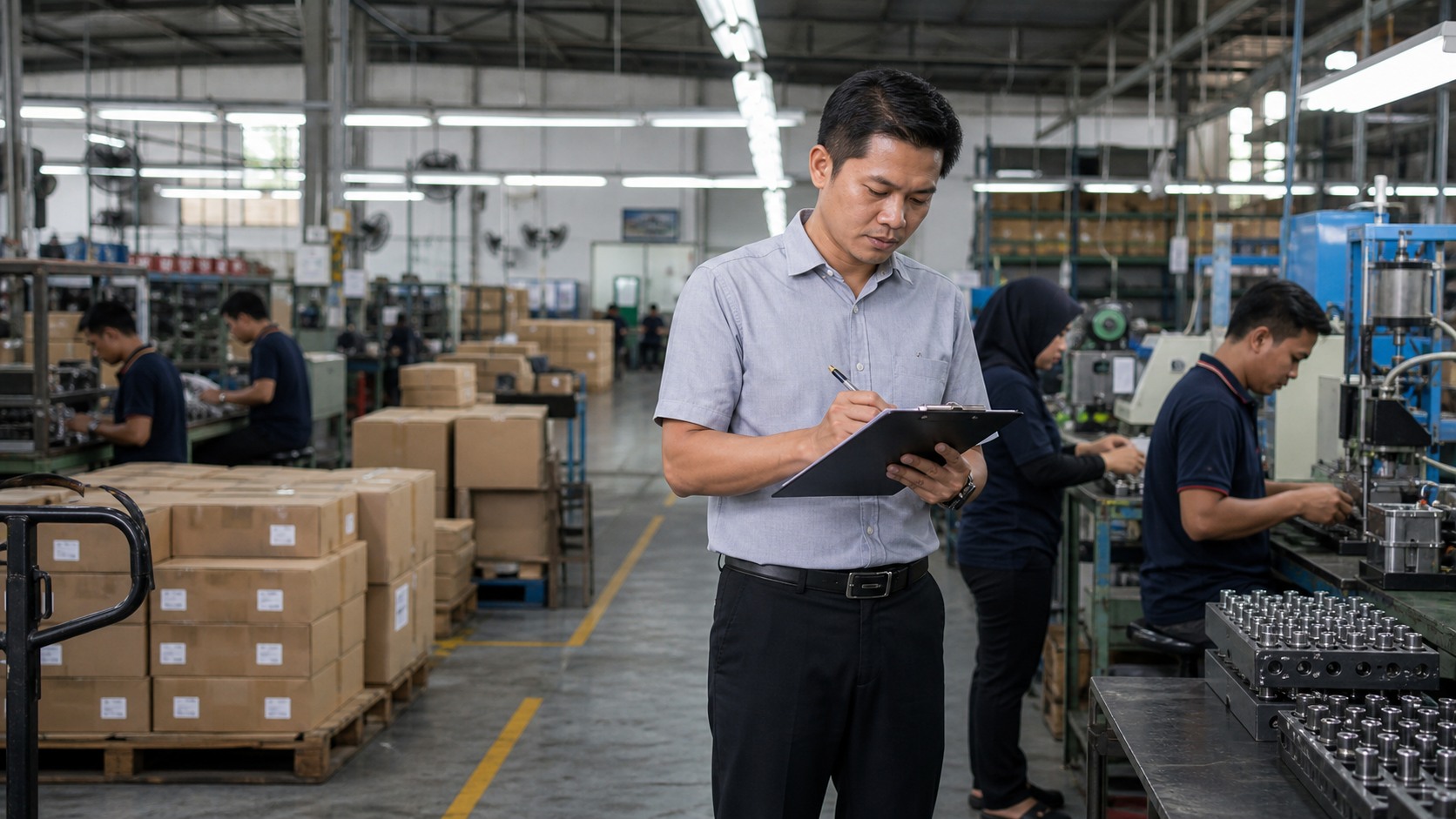
If your team is producing more with nearly the same headcount, the next decision is not automatically “hire more.” It may be “remove the bottleneck without adding the wrong fixed cost.”
BusinessToday reported on August 20, 2026 that Malaysia’s labour productivity per hour worked rose 5.5% year on year to RM46.50 in the second quarter of 2026, with manufacturing leading the gain. The report, based on the latest Department of Statistics Malaysia (DOSM) release, also said total hours worked rose 0.5% to 9.6 billion hours and total employment increased 1.1% to 16.8 million people.
For Malaysian SMEs, that combination matters. It suggests output improved faster than labour input. In plain terms, some businesses may be getting more production, service capacity, or delivery value from the people and assets they already have. That can be a good sign, but it also raises a harder planning question: should you add staff, upgrade equipment, or simply run the current operation more efficiently for longer?
What Happened In 2Q 2026
According to BusinessToday, Malaysia’s labour productivity per employment also rose 4.9% to RM26,595 per person in the second quarter.
The biggest push came from manufacturing, where value added increased 7.3% to RM104.01 billion and labour productivity per hour worked climbed 7.1% to RM62.20. The report said labour productivity per employment in manufacturing rose 7.3% to RM36,653 per person, while employment in the sector grew only 0.1% to 2.84 million people.
The services sector stayed positive as well. BusinessToday reported that value added in services rose 5.9% to RM265.97 billion, while labour productivity per hour worked increased 5.4% to RM44.40. Productivity per employment in services rose 4.2% to RM25,236 per person.
The DOSM release also showed a mixed sector picture. Mining and quarrying rebounded, but agriculture contracted and remained the weakest major sector in productivity terms during the quarter.
Why This Matters For Malaysian SMEs
The search intent behind this story is simple: if Malaysia’s productivity is rising, what should business owners do differently with hiring, equipment, and capacity planning?
The first implication is that better output does not always require immediate headcount expansion. If a factory, workshop, warehouse, or service team is already producing more from better scheduling, steadier demand, or improved asset use, rushing to add payroll can narrow margins before revenue quality is proven.
The second implication is that equipment quality starts to matter more when productivity improves. When your team is busier, older machines, vehicles, forklifts, or production tools can become the real limit. That often turns into overtime, delays, maintenance disruption, or inconsistent fulfilment before it shows up clearly in financial statements.
The third implication is that productivity gains can hide uneven business conditions. A strong national reading does not mean every SME is ready to expand. Agriculture weakened in the quarter, and even stronger sectors can still face patchy orders, slower customer payments, or input-cost pressure.
What Owners Should Check Before Expanding
Before you commit to new payroll or new repayments, check the operating signals behind the headline:
- whether better output is coming from confirmed orders or short-term catch-up work
- whether utilisation is rising because of real demand or temporary overtime
- whether your biggest bottleneck is labour, equipment uptime, stock flow, or delivery capacity
- whether customer collections are strong enough to support expansion timing
If the real problem is asset reliability rather than labour shortage, a staged financing review may make more sense than immediate hiring. That is where comparing equipment financing, commercial vehicle financing, or loan financing against actual order flow can be more useful than reacting to one macro data point.
This data also fits with other recent Malaysia operating signals we have covered, including Malaysia’s July factory-orders improvement and Malaysia’s business-loan growth in June 2026. Together, they point to a market where demand may be improving, but timing discipline still matters.
What To Watch Next
If productivity keeps rising while employment growth stays relatively modest, more businesses may start prioritising automation, equipment upgrades, workflow redesign, and targeted asset replacement over broad hiring.
If productivity softens while labour and operating costs keep rising, the pressure could shift back toward margin protection. That is why the next few quarters matter more than a single release.
For SMEs, the practical takeaway is not to chase productivity headlines as proof that expansion is always safe. It is to use them as a prompt to ask what is actually creating output in your business and whether the next ringgit should go into payroll, equipment, or working-capital protection.
Where Ing Heng Fits
Ing Heng fits this story as a planning checkpoint, not a productivity slogan.
If stronger demand is pushing your business toward a machine replacement, extra delivery capacity, warehouse equipment, or site assets, the useful step is to match financing timing to real utilisation and collections. When productivity rises, the best move is often not the biggest expansion. It is the one that removes the most expensive bottleneck without creating unnecessary fixed pressure.
News Source
- BusinessToday. “Malaysia’s Labour Productivity Growth Jumps 5.5% In 2Q 2026 Led By Manufacturing.” Published August 20, 2026. Source URL: https://www.businesstoday.com.my/2026/08/20/malaysias-labour-productivity-growth-jumps-5-5-in-2q-2026-led-by-manufacturing/
- Department of Statistics Malaysia. “Labour Productivity, Second Quarter 2026.” Released August 20, 2026. Source URL: https://www.dosm.gov.my/portal-main/release-content/labour-productivity-q22026
Questions Business Owners Ask
How much did Malaysia's labour productivity grow in the second quarter of 2026?
BusinessToday, citing DOSM data released on August 20, 2026, reported that labour productivity per hour worked rose 5.5% year on year to RM46.50 in the second quarter.
Which sector led Malaysia's productivity gains in 2Q 2026?
The report said manufacturing led the major sectors, with labour productivity per hour worked increasing 7.1% to RM62.20.
Why should SMEs care about a productivity headline?
Higher productivity can signal that businesses are producing more value from labour and assets, which affects hiring timing, equipment replacement decisions, and margin planning.
Does better productivity mean every business should expand now?
No. Businesses still need to compare confirmed orders, collections, utilisation, and bottlenecks before locking in payroll or repayment commitments.
Related News

Malaysia Economy News
Malaysia's Fuel Subsidy Exposure Is Still A Cost-Planning Signal For SMEs
Malaysia Economy News
Sunway's RM1.044 Billion US Tech Fit-Out Job Could Tighten Contractor Capacity
Malaysia Economy News
