Port Dickson's Smart Port Groundbreaking Signals A New Logistics Capacity Story For Malaysia
BusinessToday reported on July 14, 2026 that Midport broke ground in Port Dickson as Malaysia's first smart AI container port. For Malaysian logistics operators, suppliers, and SMEs, the practical question is what a new 8 million-TEU port project could change before the cargo actually starts moving.
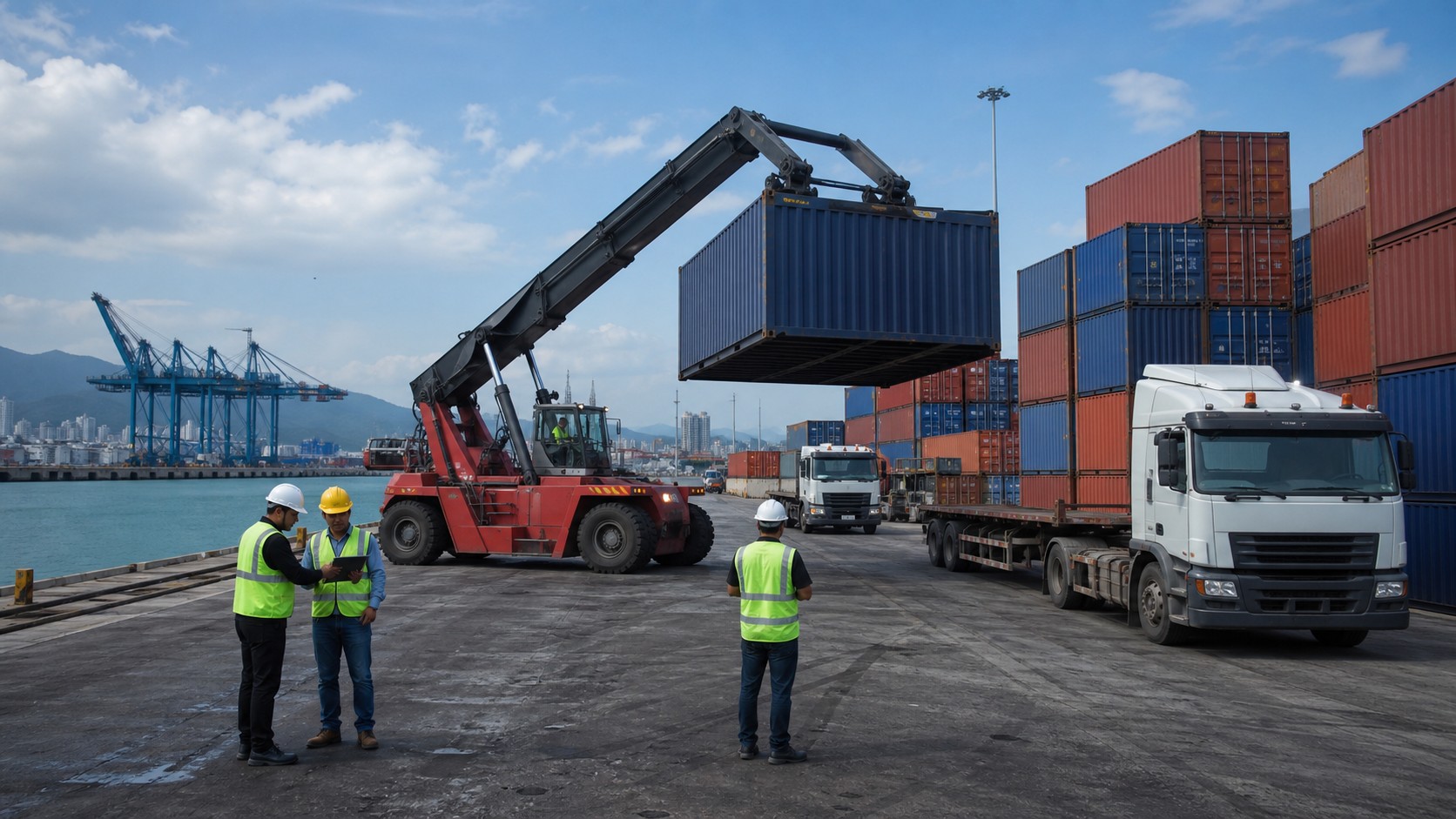
If your business sits anywhere near haulage, warehouse support, port services, fleet planning, or industrial supply, this is the kind of infrastructure headline worth watching early instead of late.
BusinessToday reported on July 14, 2026 that Midport broke ground in Pasir Panjang, Port Dickson as Malaysia’s first smart AI container port. The source said the project is planned across 180 acres, with six berths, a 1.5-kilometre trestle, and a target capacity of up to 8 million TEU at full build-out.
For Malaysian SMEs, the useful question is not whether the project sounds ambitious. It is whether a new logistics node could start changing contractor demand, inland transport planning, supplier timing, and support-service capacity before the port is fully active.
What Happened In Port Dickson
According to BusinessToday, the project is being developed by Midports Holdings Sdn Bhd, a 79%-owned subsidiary of Tanco Holdings Berhad, in collaboration with MBINS, Negeri Sembilan’s state investment arm.
The report said the port is designed around artificial intelligence, automation, and data analytics to support smarter logistics operations. BusinessToday also said the site sits within the gazetted Kuala Sungai Linggi Port Limits and benefits from a natural depth of up to 21 metres, which could reduce dredging needs and allow it to receive very large container vessels.
One of the bigger points in the story is the scale of the trade corridor it is trying to serve. BusinessToday said the Strait of Malacca handles 22% of global maritime trade, and cited projections that container demand along the route could outpace capacity by around 27 million TEU by 2030.
Why This Matters For Malaysia Business Readers
The business value here is not only about shipping headlines. A new port project can start affecting the wider operating environment long before it is fully built.
That usually shows up through practical changes such as:
- more contractor and subcontractor activity around site works and logistics support
- higher demand for haulage, yard equipment, maintenance, and industrial services
- earlier supplier commitments for materials, machinery, and transport assets
- new route-planning questions for inland operators serving Negeri Sembilan, Klang Valley, and southbound cargo corridors
For smaller businesses, the opportunity is not guaranteed. But the timing pressure can still become real. When a large infrastructure project begins to gather momentum, the first challenge is often readiness rather than demand itself.
What To Watch Before Cargo Volumes Arrive
This is still an early-stage project, so the article is not a reason to assume immediate port throughput or rush into expansion.
The better question is whether nearby operators and suppliers should start watching for early signals such as:
- more tender activity tied to marine works, logistics services, or site support
- stronger demand for lorry movements, lifting equipment, storage, or workforce coordination
- supplier lead times stretching if more industrial buyers start booking the same assets
- secondary demand shifting toward depots, workshops, transport support, and warehousing outside the port itself
If your business already tracks port-linked demand, it may also help to compare this story with other Malaysia logistics signals such as Bintulu’s transition plans or broader freight-asset decisions under commercial vehicle financing.
Where Ing Heng Fits
Ing Heng fits only at the planning edge of this story. If a new logistics corridor is starting to affect when you need a lorry, forklift, yard equipment, or support assets, the useful move is to review options before the need becomes urgent.
That does not mean treating every new port announcement as a reason to borrow. It means checking whether demand signals around your business are becoming concrete enough that preserving working cash now matters more than waiting until equipment or vehicle decisions turn into a bottleneck.
News Source
- BusinessToday. “Tanco Subsidiary Midports Holdings Breaks Ground For Malaysia’s First Smart AI Container Port.” Published July 14, 2026. Source URL: https://www.businesstoday.com.my/2026/07/14/tanco-subsidiary-midports-holdings-breaks-ground-for-malaysias-first-smart-ai-container-port/
Questions Business Owners Ask
What happened in Port Dickson on July 14, 2026?
BusinessToday reported that Midports Holdings broke ground for Midport in Port Dickson, described as Malaysia's first smart AI container port.
How large is the proposed Midport project?
BusinessToday said the project spans 180 acres, includes six berths and a 1.5-kilometre trestle, and targets up to about 8 million TEU at full build-out.
Why should SMEs care before the port is operational?
Because large logistics infrastructure can affect contractor demand, haulage planning, warehouse support, supplier timing, and inland transport capacity well before cargo volumes show up in final trade data.
Related News

Malaysia Economy News
Malaysia's Petroleum Reserve Study Could Change How Fuel-Exposed SMEs Plan Risk
Malaysia Economy News
Malaysia's LSS6 Solar Push Could Pull Contractor And Supplier Timelines Forward
Malaysia Economy News